In brief
In a catastrophic turn of events, the historic Amsterdam Island has been engulfed by wildfires, threatening its unique ecosystem and impacting vital research activities.
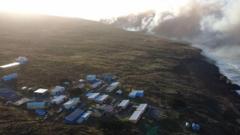
For nearly a month, Amsterdam Island, a remote French territory in the southern Indian Ocean, has battled a devastating wildfire that has scorched more than 55% of its area, covering 54 square kilometers. The island, situated between Australia, Antarctica, and Madagascar, is uninhabited on a permanent basis, housing only a scientific research station since the 1980s.Authorities evacuated 31 researchers to Réunion Island, which is closer to Madagascar, as efforts to manage the wildfire intensified. The fire was first detected on January 15 by researchers at the Pointe Bénédicte observatory, a critical facility tasked with monitoring greenhouse gases, mercury, and aerosols in the air. Despite attempts to contain the flames, the fire rapidly spread toward the core research base — Martin-de-Viviès.Computer scientist Rémi Chazot, one of the evacuated researchers, expressed their unexpected fortune at being rescued by a passing lobster fishing boat, the Austral, which had unduly delayed its departure due to unfulfilled quotas. "This boat should have left a week earlier, but it had not caught its lobster quota," he informed Le Monde newspaper. Without that timely assistance, the situation could have escalated dramatically.Satellite images reveal extensive fire damage, impacting the island's solar power infrastructure and its vital communication and food supply lines. Additionally, this blaze threatens the island's rich biodiversity, home to distinctive wildlife such as the Amsterdam Albatross, which breeds exclusively there, and the yellow-nosed albatross, with 84% of its global population residing in the area. The breeding grounds for southern elephant seals and sub-Antarctic fur seals were also placed at risk.The absence of permanent human residents means the island has been a prime location for atmospheric research focused on climate change, making the current evacuation the first suspension of such research in 45 years. Marc Delotte, director of the Laboratory for Climate and Environmental Sciences (LCES), highlighted the long-term consequences of the wildfire: "Returning to normal will require time and resources, which will result in a significant data void."To assess the damage and secure the settlement, a reconnaissance mission has been dispatched by the French navy. This team comprises firefighters and technical staff prepared to uncover the origins of the fire and ensure the reinstatement of essential energy and water supplies.As the situation unfolds, scientists and wildlife advocates remain concerned about the irreparable damage inflicted on this precious ecological location. The Amsterdam Island fire serves as an urgent reminder of the fragility of our planet's unique environments and the importance of immediate action to address the escalating climate crisis.