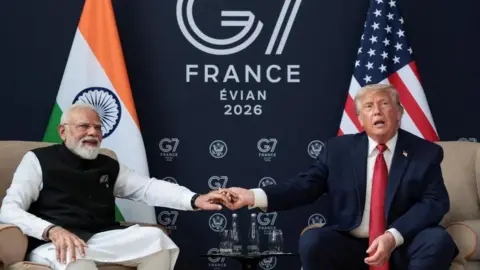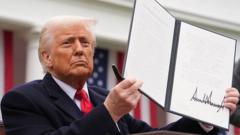
In an interesting turn of events in global trade relations, the U.S. has recently established a trade agreement with Japan, marking a notable success for President Trump's controversial tariff tactics. This deal, while perhaps the least unfavorable among major trading partners, suggests that Trump's hardline approach may be gaining traction as further negotiations loom on the horizon.
The trade discussions between the U.S. and Japan had been ongoing, with various diplomatic delegations attempting to navigate the complex relationship. Japan’s Finance Minister made headlines during negotiations by referencing the nation’s substantial $1.1 trillion in U.S. Treasury bonds as a leverage point. The tariffs imposed by the U.S. on Japanese goods—15%—exceed those on imports from the UK, which stands at 10%. However, the UK does not maintain a trade surplus.
The geopolitical landscape has implications not just for the U.S.-Japan relationship but also for broader international partnerships. As Japan and the U.S. finalize their agreement coinciding with discussions taking place in Tokyo with EU leaders, tensions have eased that might have encouraged joint reprisals against the U.S. An overarching question remains about why similar favorable arrangements cannot be secured by European countries amidst rising calls for tariffs from their leadership.
Despite securing the deal with Japan, the implications on agricultural imports, particularly rice, remain ambiguous, and it's uncertain how the U.S. automotive industry could improve its market presence in Japan. Prime Minister [Yoshihide] Suga’s domestic political vulnerabilities likely influenced Japan’s decision to act now rather than wait until the end of Trump’s term.
The economic implications of the tariffs are already being felt, with the U.S. Treasury expecting to collect up to $300 billion in revenue from tariffs this fiscal year. Yet, this influx comes at a cost; consumers will ultimately bear the burden as higher prices on imported goods become unavoidable. The market dynamics are compounded by a declining U.S. dollar—down by 10% this year—which has further inflated import costs.
Moreover, while the weakened dollar is seen as a tactic to revitalize U.S. manufacturing, it also offers a narrative for competitors like China to position themselves as stable trading partners in contrast to the U.S.'s rollercoaster tariff approach.
As these international trade challenges develop, Japan's recent deal stands out as a significant achievement for the Trump administration, eliciting debates about the effectiveness of his trade strategy while leaving many questions regarding the future of global trade. The complexities of these economic shifts suggest that despite initial successes, the broader implications for consumers and alliances remain intricate and uncertain.
The trade discussions between the U.S. and Japan had been ongoing, with various diplomatic delegations attempting to navigate the complex relationship. Japan’s Finance Minister made headlines during negotiations by referencing the nation’s substantial $1.1 trillion in U.S. Treasury bonds as a leverage point. The tariffs imposed by the U.S. on Japanese goods—15%—exceed those on imports from the UK, which stands at 10%. However, the UK does not maintain a trade surplus.
The geopolitical landscape has implications not just for the U.S.-Japan relationship but also for broader international partnerships. As Japan and the U.S. finalize their agreement coinciding with discussions taking place in Tokyo with EU leaders, tensions have eased that might have encouraged joint reprisals against the U.S. An overarching question remains about why similar favorable arrangements cannot be secured by European countries amidst rising calls for tariffs from their leadership.
Despite securing the deal with Japan, the implications on agricultural imports, particularly rice, remain ambiguous, and it's uncertain how the U.S. automotive industry could improve its market presence in Japan. Prime Minister [Yoshihide] Suga’s domestic political vulnerabilities likely influenced Japan’s decision to act now rather than wait until the end of Trump’s term.
The economic implications of the tariffs are already being felt, with the U.S. Treasury expecting to collect up to $300 billion in revenue from tariffs this fiscal year. Yet, this influx comes at a cost; consumers will ultimately bear the burden as higher prices on imported goods become unavoidable. The market dynamics are compounded by a declining U.S. dollar—down by 10% this year—which has further inflated import costs.
Moreover, while the weakened dollar is seen as a tactic to revitalize U.S. manufacturing, it also offers a narrative for competitors like China to position themselves as stable trading partners in contrast to the U.S.'s rollercoaster tariff approach.
As these international trade challenges develop, Japan's recent deal stands out as a significant achievement for the Trump administration, eliciting debates about the effectiveness of his trade strategy while leaving many questions regarding the future of global trade. The complexities of these economic shifts suggest that despite initial successes, the broader implications for consumers and alliances remain intricate and uncertain.