The recent surge in fuel prices due to the ongoing war in Iran has spurred a global increase in demand for electric vehicles (EVs), with Chinese manufacturers, particularly BYD, taking advantage of this opportunity.
As the world's largest producer of EVs, China benefits from surging interest outside of the major US market which currently remains largely inaccessible to its car manufacturers. BYD, which recently outstripped Tesla as the world's highest seller of EVs, is expanding its reach aggressively in Asia, Europe, and South America.
We survive and are successful without the US market today, stated BYD's executive vice president, Stella Li, during an interview at the Beijing Auto Show. The company is instead concentrating on meeting heightened demand in regions like Brazil, the UK, and Europe.
Li pointed out that the increasing cost of oil has encouraged consumers to turn to EVs, with practical savings realized on fuel. Actually, we are now suffering from insufficient capacity. Our demand is much higher than what we can supply, she added.
BYD is banking on its innovative 'flash charging' technology, which Li describes as revolutionary, aiming to alleviate consumer concerns regarding slow charging times by providing significantly quicker charging solutions.
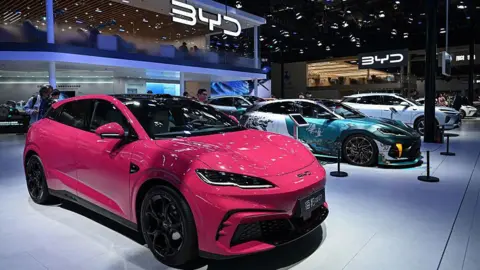
The company's presence was prominently displayed at this year's Beijing Auto Show, featuring over 1,400 vehicles from various manufacturers, underscoring the prominence of Chinese brands in the industry.
However, BYD and other Chinese EV manufacturers are not without their challenges. They face tariffs and regulatory scrutiny, especially from the US, which has expressed concerns about Chinese government subsidies and issues related to national security.
Despite the hurdles, BYD is enhancing its brand recognition in other markets and is gradually shifting from a focus of competing primarily on price to showcasing advancements in technology and infrastructure. Li accentuated that BYD is not solely a car manufacturer, but rather part of a broader ecosystem involved in producing battery storage, solar panels, and other electric vehicles.
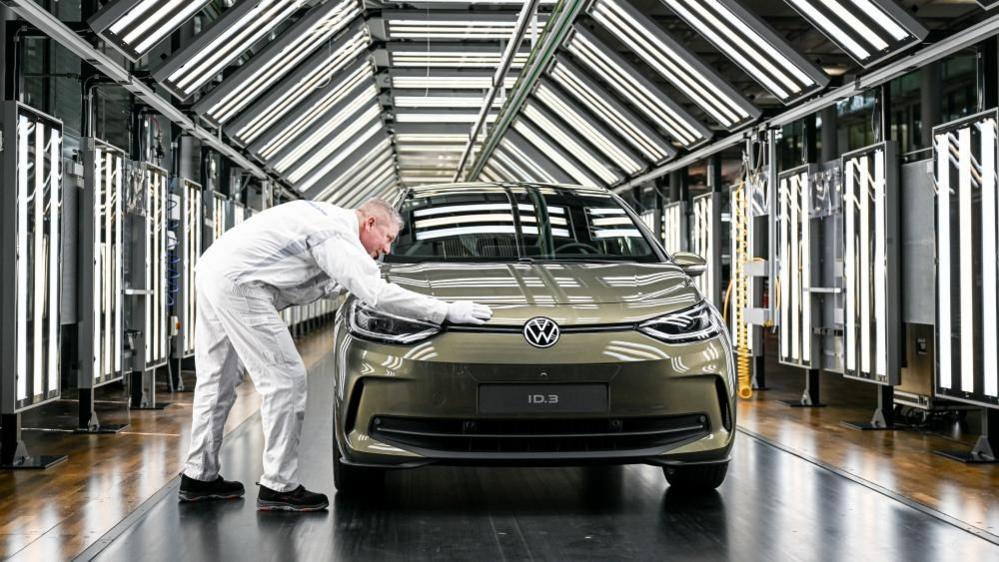
The renewed emphasis on innovation is apparent at the automobile event, with companies like X-Peng unveiling advancements in EVs and announcing future projects like humanoid robots and flying cars. Foreign manufacturers such as Volkswagen and Toyota, once dominant in China, now find themselves in collaboration with local firms to keep pace with the evolving market.
In a rapidly changing landscape, BYD's determination to expand its global footprint amidst domestic challenges showcases resilience and adaptability in the competitive realm of electric vehicles.