In brief
A mid-air helicopter crash in January 2023 that caused the deaths of four individuals, including two British tourists, is being attributed to a malfunctioning radio antenna. The investigation underscores the necessity for stringent safety protocols during operational changes in aviation.
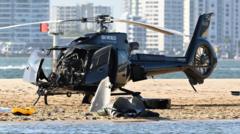
A faulty radio antenna is at the heart of a tragic helicopter collision that claimed the lives of four people, including two British tourists, at an Australian theme park. This incident, which occurred in January 2023 near Sea World on the Gold Coast, left six others gravely injured, leading to an extensive investigation by Australia's Transport and Safety Bureau (ATSB). The preliminary findings indicated that the antenna malfunction prevented a critical radio call from being heard just before the incident took place.The two helicopters collided a mere twenty seconds after one took off while the other was preparing to land. All casualties were aboard the helicopter that was in the process of taking off. The second aircraft managed to make an emergency landing, but its passengers sustained various injuries. The ATSB report highlights that Sea World's operational changes before the accident led to a gradual erosion of risk controls that were necessary for effective traffic separation between helicopters. Among these changes was the introduction of larger Eurocopter EC140 B4 helicopters and the establishment of a new helipad, which inadvertently created a conflict in air traffic management.In the moments leading up to the crash, the pilot of the departing helicopter was misinformed about the airspace status. A ground crew member had relayed that it was clear for takeoff, but this information had become outdated by the time the helicopter left the ground. The pilot of the arriving helicopter, who was focused on landing, had seen the other aircraft but did not perceive a threat at that moment. The malfunctioning antenna resulted in critical communication being interrupted, preventing vital safety alerts that could have averted the collision.Among the deceased were Diane Hughes, 57, and her husband Ron, 65, who had just married in 2022. They were visiting relatives after being separated by the COVID pandemic. The report also notes the loss of Sydney resident Vanessa Tadros, 36, and helicopter pilot Ashley Jenkinson, 40, originally from Birmingham. Following the accident, other passengers praised the pilot of the aircraft that managed to land safely as a "hero." The ATSB's thorough investigation concluded with 28 findings highlighting critical lessons for aviation operators and pilots to manage procedural changes effectively, ensuring that safety is never compromised. ATSB Chief Commissioner Angus Mitchell emphasized that operational modifications, even those aimed at increasing safety, can yield unintended adverse effects, reinforcing the need for meticulous safety protocols within aviation operations.