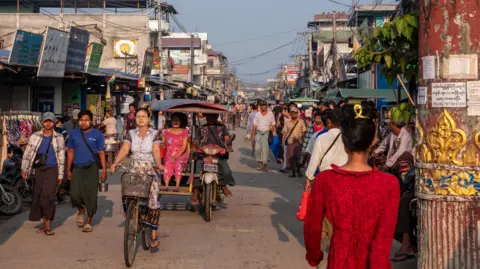
Shwe Kokko, or Golden Raintree, has emerged on the Myanmar side of the Moei River—an extraordinary city built in a region plagued by conflict. Eight years ago, the area was devoid of modern structures, marred by civil unrest. Now, it boasts shiny high-rises and the fruits of rampant ambition, yet is tarnished by allegations of scams, money laundering, and human trafficking.
Spearheaded by She Zhijiang, whose company Yatai developed the city, Shwe Kokko was conceived as a destination for tourism and wealth, particularly aimed at attracting affluent Chinese visitors. In stark contrast, the luster of this so-called resort city masks an underbelly of illicit activities, culminating in Zhijiang's arrest in Bangkok on charges related to fraud.
Once hailed as a joint effort between Zhijiang and local warlords, Shwe Kokko now finds itself isolated within civil war-torn Myanmar, complicated further by a decline in Chinese investment and tourism due to rising crime reports targeting nationals. With Thailand cracking down on shady dealings along the border, Shwe Kokko struggles to attract the necessary influx of visitors to sustain its existence.
The city’s mystique is amplified by its inaccessibility; gaining entry requires navigating through multiple security checkpoints amidst an escalating military conflict. Those who venture in are often led through curated tours propagating the vision of a thriving, legitimate metropolis, despite whispers of ongoing scams and fraud operations continuing to thrive just out of sight.
While Yatai has attempted to redefine its image—billboards proclaims Shwe Kokko as a "scam-free zone"—local residents point to the stark reality that many scam compounds remain operational within the high-rises. Victims, workers, and observers recount harrowing experiences, and multiple accounts have surfaced detailing the systematic manipulation and exploitation of vulnerable individuals.
Amidst this backdrop, She Zhijiang claims reckless hardship, proclaiming himself a victim of geopolitical intrigue and operational mismanagement within China. As legal battles ensue, the criticism of the city persists, with analysts asserting that unless legitimate businesses emerge, Shwe Kokko's identity will remain intrinsically linked to criminal enterprise.
As it stands, the prospects for Shwe Kokko remain uncertain amid warnings from authorities and declining foreign interest. The mixture of ambition and illegitimacy may spell doom for a city striving for legitimacy in a region rife with violence and lawlessness. Continued efforts to expose the truth behind Shwe Kokko's glittering facade face unavoidable challenges as the specter of the past continues to haunt its future.
Spearheaded by She Zhijiang, whose company Yatai developed the city, Shwe Kokko was conceived as a destination for tourism and wealth, particularly aimed at attracting affluent Chinese visitors. In stark contrast, the luster of this so-called resort city masks an underbelly of illicit activities, culminating in Zhijiang's arrest in Bangkok on charges related to fraud.
Once hailed as a joint effort between Zhijiang and local warlords, Shwe Kokko now finds itself isolated within civil war-torn Myanmar, complicated further by a decline in Chinese investment and tourism due to rising crime reports targeting nationals. With Thailand cracking down on shady dealings along the border, Shwe Kokko struggles to attract the necessary influx of visitors to sustain its existence.
The city’s mystique is amplified by its inaccessibility; gaining entry requires navigating through multiple security checkpoints amidst an escalating military conflict. Those who venture in are often led through curated tours propagating the vision of a thriving, legitimate metropolis, despite whispers of ongoing scams and fraud operations continuing to thrive just out of sight.
While Yatai has attempted to redefine its image—billboards proclaims Shwe Kokko as a "scam-free zone"—local residents point to the stark reality that many scam compounds remain operational within the high-rises. Victims, workers, and observers recount harrowing experiences, and multiple accounts have surfaced detailing the systematic manipulation and exploitation of vulnerable individuals.
Amidst this backdrop, She Zhijiang claims reckless hardship, proclaiming himself a victim of geopolitical intrigue and operational mismanagement within China. As legal battles ensue, the criticism of the city persists, with analysts asserting that unless legitimate businesses emerge, Shwe Kokko's identity will remain intrinsically linked to criminal enterprise.
As it stands, the prospects for Shwe Kokko remain uncertain amid warnings from authorities and declining foreign interest. The mixture of ambition and illegitimacy may spell doom for a city striving for legitimacy in a region rife with violence and lawlessness. Continued efforts to expose the truth behind Shwe Kokko's glittering facade face unavoidable challenges as the specter of the past continues to haunt its future.