In brief
India has officially marked a significant milestone in its space exploration journey with the successful docking of two spacecraft, a major achievement for the Indian Space Research Organisation (ISRO) as it sets its sights on a future space station and lunar missions.
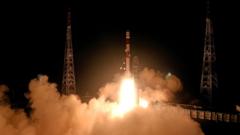
The SpaDeX mission debuted on December 30th from the Sriharikota launch pad, with two spacecraft, the "Chaser" and "Target", separating in space before their pivotal docking maneuver. After several delays, the docking process concluded successfully, making India the fourth nation globally to achieve this technology, joining the ranks of the United States, Russia, and China. Prime Minister Narendra Modi celebrated the achievement from ISRO's Bangalore office, emphasizing its role in paving the way for India's ambitious future space endeavors.The spacecraft, each weighing approximately 220 kg (485 lbs), were designed for close manipulation in orbit. Starting the process required the Chaser to reduce its speed while closing the gap to just 3 meters before connecting ingeniously. A crucial payload involved researching crop growth in micro-gravity, aiming to address food sustainability for astronauts on prolonged missions.Following the successful docking, ISRO scientists will investigate inter-satellite communication and continue further experiments, including transferring electrical power between the spacecraft. The mission also includes valuable scientific instruments to monitor radiation and Earth's natural resources.Additionally, ISRO creatively utilized the remaining rocket section from the SpaDeX launch to perform innovative experiments over the next three months, leveraging its potential for exploration rather than allowing it to become space debris. The future goal includes Chandrayaan-4, which aims to collect lunar soil samples.As India strides confidently into an expanded role in space exploration, the SpaDeX mission lays a foundation for future missions, with potential benefits for human space settlements beyond Earth.