In brief
Pahalgam, a picturesque town in Kashmir, has been struggling to revive its tourism industry following a militant attack that claimed 26 lives. The attack triggered security crackdowns and substantial declines in visitor numbers, making recovery challenging. Local businesses heavily reliant on tourism are still feeling the impact, with many operators facing severe financial distress. While some tourists are cautiously returning, the lingering effects of fear and anxiety continue to overshadow the region.
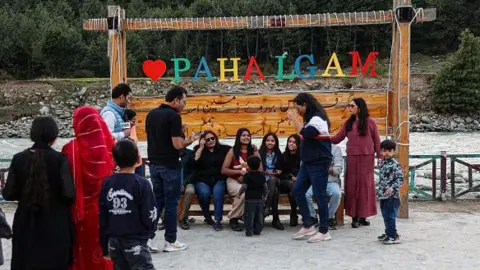
Nazakat Ali's phone rings in the evening, as it often does now. The 30-year-old tourist guide in Indian-administered Kashmir answers with the same practiced calm every time—yes, it is safe; yes, he will be there; yes, they should come. On the other end are people planning holidays to the stunning Himalayan region, known for its mountains and meadows. There is a lot of fear, he says. We have to convince them that everything is fine.A year after militants killed 26 people in Pahalgam town—one of the deadliest attacks on tourists in Kashmir in decades—the region's tourism economy has yet to recover. In the weeks that followed, authorities shut 48 of 87 tourist sites in the region. Visitor numbers fell sharply from nearly three million in 2024 to under 1.2 million in 2025. Some sites have since reopened, but the Baisaran meadow—where the killings took place—remains closed.The attack struck at the heart of a fledgling industry that had endured despite years of uncertainty. Violence in Kashmir, claimed in full by both India and Pakistan but administered in parts by each, has claimed thousands of lives in the past few decades. The attack in Pahalgam added to the strain, triggering four days of military conflict, with Delhi accusing a Pakistan-based group of carrying out the killings—a charge Islamabad denied.While tourist numbers have begun to recover elsewhere in Indian-administered Kashmir, Pahalgam has struggled to draw visitors back. The town recorded about 259,000 visitors between January and mid-April this year, down from more than 469,000 in the same period before the attack. This decline has hit local businesses hard. Just four months before the attack, Mohammad Abubakar invested two million rupees ($21,254) to open a hotel. But after April, we earned almost nothing, he said, adding that he had to shut down the business.In the days after the killings, security operations intensified. Nearly 3,000 young men were detained for questioning, and in some areas authorities demolished the homes of suspected militants, extending the consequences of the attack into everyday life.While officials say the security situation has stabilized, the uncertainty lingers, raising questions over when, or if, visitors will return. Abdul Waheed Bhat, head of the pony riders' association, said, We've seen difficult times before, but this attack is different. This has sent a very negative message.Tourism in Kashmir had previously found a place within a cycle of unrest marked by phases of protest and violence. The attack shattered that uneasy balance by targeting visitors in one of Kashmir's busiest hubs, disrupting the livelihoods of many.Now, in Pahalgam, guides gather at the roadside, waiting for work that may or may not come. Hotels that once ran at full capacity now sit largely empty, with as much as 80% of rooms unoccupied. Meanwhile, visitors approach the newly erected memorial in silence.Nazakat Ali continues to answer calls, providing reassurances to potential tourists, while feeling the weight of the community's trauma from the past year. As he reflects, he says, Nothing in the landscape has changed, and yet the place does not feel entirely the same.\