In brief
Despite LA's reputation for car obsession, a new push for comprehensive bike lane infrastructure aims to revitalize the city’s transit options before the upcoming World Cup and Olympics. While many advocate for this change, significant skepticism and push-back from car-loving residents pose challenges to a potential cycling revolution.
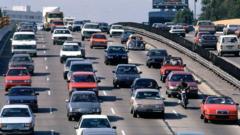
Amidst its identity as a car-dominated metropolis, Los Angeles is turning its gaze towards bicycles as a viable mode of transportation as the city gears up for the 2026 World Cup and the 2028 Olympic Games. Long associated with sprawling highways and traffic congestion, there are now renewed efforts to integrate cycling into the urban landscape. Advocates believe that with the city's year-round sunshine and growing bicycle infrastructure, a cultural shift could be on the horizon.Damian Kevitt, the executive director of Streets Are For Everyone (SAFE), emphasizes the pressing need for safer cycling alternatives. “It is the perfect community for runners and cycling, yet as a generality, we are hooked on our vehicles," he noted. The city has only seen about 1% of its workforce cycling to jobs, which is starkly low given its favorable climate compared to biking heavy cities like Amsterdam.The city's “Twenty-eight by '28” transport plan initiated in 2017 is a significant step toward enhancing cycling and public transit as Los Angeles readies itself for a wave of visitors. Although the future of the initiative looks bright with the installation of bike lanes, the sentiment among long-time car drivers is mixed. Some locals express frustration regarding the new bike lanes, arguing they contribute to heightened traffic congestion, complicating their daily commutes.One vocal opponent, Darin Drabing, president and CEO of Forest Lawn Cemetery, argues that the bike lane expansion in his area can negatively impact funeral services and increase commuter traffic. Despite such objections, city voters overwhelmingly supported new measures to enhance bike lanes and pedestrian areas in 2024.However, past political decisions in cities like Toronto, where bike lanes faced removal amid public outcry, add to the skepticism around LA’s plans. Similarly, challenges arise in Hollywood Boulevard as new protected biking paths are seen as contributing to significant vehicular slowdowns, igniting further debates.Yet, there’s optimism from advocates and cyclists like Mimi Holt, who sees the health benefits of biking outweighing the challenges posed by car congestion. "If only there was a connecting path, I would be on them all the time,” she remarked, expressing her hope for an interconnected biking network throughout LA.Mayor Karen Bass remains committed to a “transit-first” Olympics approach and aims for a long-lasting transportation transformation that outlasts the international events. While the city has secured substantial federal funding to assist with rail projects, concerns mount over the slow implementation of cycling lanes. Moreover, the idea of a car-free Olympics is met with mixed reactions from residents; some describe it as an unrealistic dream in a city known for its automobile dependency. Nevertheless, supporters like Holt view the shift away from car dependency as vital for economic, environmental, and health reasons.As Los Angeles navigates its transition amid differing perspectives on bicycle infrastructure, the pressing question lingers: Can the City of Angels embrace a bicycle-friendly future before it welcomes the world in 2028?