In brief
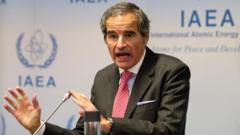
Rafael Grossi, director general of the IAEA, highlights the troubling escalation in Iran's uranium enrichment to 60%, urging the need for vigilance amid a shift in public discourse around nuclear weapons.
In a recent statement, Rafael Grossi, the head of the International Atomic Energy Agency (IAEA), voiced serious concerns regarding Iran's decision to significantly boost its uranium enrichment activities. In an interview with the BBC, Grossi described the country’s production of highly enriched uranium, now at 60% purity, as "very worrisome." This level of enrichment is perilously close to the threshold needed for nuclear weapons. Analysts believe this move may be a reaction to Iran's military and diplomatic challenges in regions like Syria, Lebanon, and Gaza.During his discussions in Tehran, Grossi acknowledged the presence of politicians advocating for nuclear weapon development; however, he clarified that such paths do not appear to align with the current government's strategic choices. His comments coincided with the Manama Dialogue conference held in Bahrain, where he cautioned Israel against potential military actions targeting Iranian nuclear facilities, warning that repercussions could escalate into retaliation and environmental hazards due to radiation.In a recent report, Grossi indicated that IAEA inspectors confirmed that Iran had increased the flow of partially enriched uranium into centrifuges at the Fordow facility, allowing for a markedly enhanced production rate—projecting an output of approximately 34 kilograms of 60% enriched uranium per month compared to just 4.7 kilograms previously. Grossi emphasized the urgent need for additional safeguards at the facility to maintain credible oversight of Iran's nuclear activities, particularly to ensure that uranium is not diverted for military purposes.Despite Iran's continual denial of pursuing a military nuclear program, Grossi highlighted the proliferation of their nuclear ambitions, which have evolved significantly since the Iran of 2015. He expressed concern that a change in leadership rhetoric towards nuclear armament could lead to accelerated weaponization capabilities. In light of stalled negotiations with European officials, Iran's decision to enhance enrichment activities signifies a troubling shift in the nation’s nuclear strategy.Additionally, Grossi reflected on the broader implications of global nuclear discourse, noting a disturbing trend where nations are reconsidering their positions on nuclear armament in the context of heightening geopolitical tensions. Such attitudes signify a potential fracture in the non-proliferation regime as new conflicts sow seeds of insecurity among nations.With overt discussions among Israeli officials regarding attacks on Iranian nuclear sites, Grossi called for restraint, asserting that any military actions would not occur without serious consequences. The IAEA head stressed the need to avoid escalatory scenarios that could exacerbate tensions and provoke a radiological catastrophe. As countries grapple with an increasingly complex security environment, the potential normalization of nuclear weapons discourse presents a formidable challenge, prompting urgent reflection among global leaders on the pathways toward disarmament and sustainable peace.