In brief
India's first Test cricket tour to Australia remains a remarkable achievement against the backdrop of the country's turbulent independence in 1947. Despite personal challenges and societal strife, the team persisted, though ultimately facing defeat against the formidable Australians.
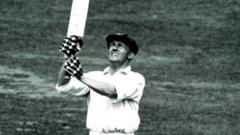
The first cricket tour of Australia by India in 1947-48 is a testament to resilience amid chaos, marking a historical rivalry that continues today. This tour unfolded during a tumultuous time in Indian history, coinciding with the painful partition that had led to communal violence and mass migrations.When India gained independence from British rule in 1947, the nation was fracturing along religious lines, resulting in unprecedented violence and heartbreak. As a symbol of unity, the 16-member cricket squad, announced by Anthony De Mello, the president of the Board of Control for Cricket in India, was meant to represent the entirety of India, despite the significant challenges the players faced.Until this tour, the Indian cricket team had only made three official visits to England, struggling in their previous tests. However, a 1946 unofficial series win against an Australian Services team sparked hope and heightened expectations for their upcoming challenge against the legendary "Bradman's Invincibles," who had returned undefeated from their own tour of England.The initial roster boasted experienced players like ace batsman Vijay Merchant and his partner Mushtaq Ali, alongside promising talents such as batting elegance Rusi Modi and bowler Fazal Mahmood. Yet a series of personal and medical setbacks proved challenging. Merchant, Modi, and Ali withdrew from the tour due to various circumstances, including medical issues and familial responsibilities following the violence of partition.Consequently, Lala Amarnath assumed command of the squad, with Vijay Hazare stepping in as his deputy. However, the violent atmosphere prevailing in India posed dangers that nearly prevented Amarnath from boarding his flight. A biography recounted that he narrowly escaped a violent mob in Patiala, Punjab. It was only through the recognition of a Sikh religious symbol — a kada — that he managed to avoid disaster.Fazal Mahmood also faced serious threats while attempting to reach the training camp. Despite brave interventions and risk-taking, contexts surrounding the partition revealed how volatile the landscape had become. Ultimately, Mahmood's horrifying experiences during his travels back to Pakistan led him to forgo the tour altogether.Though the Indian team's endeavor was weakened by the absence of several key players, they took to the field against the intimidating Australia, led by the iconic Don Bradman. The series was a challenging one, culminating in a tough 4-0 defeat for India. Nevertheless, the remarkable fortitude displayed by the players amid severe national turmoil made this inaugural tour a pivotal moment in the realm of cricket and global sporting history.As the rivalry between India and Australia helps define modern Test cricket, reflecting on the origins of this competition unveils the profound impact of history on contemporary sportsmanship and unity in the face of adversity.