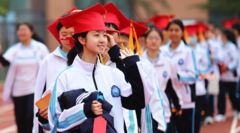
Xiao Chen, just one of the approximately 280,000 Chinese students in the US, faced disappointment recently when her visa application was rejected without explanation at the US Consulate in Shanghai. With plans to study communications in Michigan, she described feeling "like a drifting duckweed tossed in wind and storm," unsure about her future. Despite a prior acceptance letter, she is now considering a gap year due to the precarious visa situation.
The Biden administration’s latest measures to "aggressively" revoke student visas have amplified the anxiety among Chinese students. Statements from US officials targeting schools like Harvard University for alleged coordination with the Chinese Communist Party represent a growing hostility that has been dubbed a discriminatory action by China’s foreign ministry.
The trajectory of Chinese students in the US has been downward since the relationship soured, with fewer students applying due to the unfriendly environment. Under former President Trump, policies were implemented that barred students with ties to the military from acquiring visas, resulting in Chinese nationals often facing revocation of their visas without clear justification. One student had his visa cancelled upon arrival in Boston for a post-doctoral program that had no military affiliation but was turned away due to his past association with a military-affiliated institution.
Competition for admissions has also become increasingly tough; many students report being overlooked due to unfounded suspicions of espionage. A Ph.D. applicant, Mr. Cao, reflected on his struggle, stating, "One of the professors even told me, 'We rarely give offers to Chinese students these days.’”
Those who manage to graduate from US institutions are finding it challenging to reintegrate into China’s workforce, as degrees from American universities have lost their earlier prestige amidst heightened scrutiny over graduates with foreign qualifications. Chen Jian, a former student, suffered similar setbacks when his foreign degree became a liability in job applications, leading him to return to the US for further education.
Suspicion towards foreign graduates is escalating within China, where government rhetoric suggests that international students may become spies. A high-profile business leader expressed reluctance to hire individuals educated abroad, adding to the stigma and scrutiny faced by these top achievers.
The changing atmosphere from a once-welcoming society aiming to engage with the world to one that is increasingly wary marks a significant shift for the current generation of Chinese students. Recent graduates like Zhang Ni, who studied journalism at Columbia University, are startled by the new wave of mistrust against international ties. Reflecting on her childhood filled with optimism towards foreign interactions, she now recognizes the growing reluctance among Chinese firms to engage with educated individuals from overseas.
This wave of unease not only highlights the struggles of current students, but also illustrates how geopolitical tensions are deeply impacting the lives and future opportunities of a generation caught in the crossfire. The prospect of a longstanding educational bridge between China and the US now appears threatened as suspicions linger and opportunities narrow.