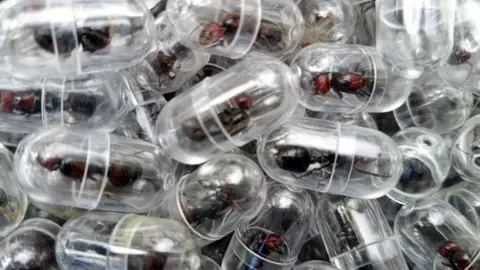
In a case that brings to light the growing crisis of wildlife trafficking, a Chinese national, Zhang Kequn, has been sentenced to one year in a Kenyan prison for trying to smuggle thousands of live queen garden ants out of the country. The verdict was delivered by a Nairobi court which also imposed a fine of 1 million Kenyan shillings (approximately $7,737). Judge Irene Gichobi characterized Zhang as not being entirely honest and noted his apparent lack of remorse during sentencing.
Zhang was arrested at Jomo Kenyatta International Airport in March while attempting to travel to China with over 2,000 ants in his luggage. Authorities have reported a rising demand for these ants in Europe and Asia, where they are considered collectible items, fetching up to $220 (£170) each.
The presiding judge emphasized the need for severe deterrents against the trafficking of wildlife, citing the negative ecological impacts associated with such crimes. Following his sentence, Zhang is set to be returned to China after serving his time. He has a 14-day window to appeal against the ruling, which his legal representative indicated would be pursued.
During the trial, it was revealed that Zhang procured the ants from a Kenyan national, Charles Mwangi, paying 10,000 Kenyan shillings (£58) for every 100 ants. Mwangi has also been charged in relation to the incident and is currently free on bail. In a related case last year, a Kenyan court sentenced four individuals — including two Belgians and a Vietnamese — to prison terms for a similar attempt to smuggle ants, highlighting the persistent issue of wildlife trafficking in the region.
Zhang was arrested at Jomo Kenyatta International Airport in March while attempting to travel to China with over 2,000 ants in his luggage. Authorities have reported a rising demand for these ants in Europe and Asia, where they are considered collectible items, fetching up to $220 (£170) each.
The presiding judge emphasized the need for severe deterrents against the trafficking of wildlife, citing the negative ecological impacts associated with such crimes. Following his sentence, Zhang is set to be returned to China after serving his time. He has a 14-day window to appeal against the ruling, which his legal representative indicated would be pursued.
During the trial, it was revealed that Zhang procured the ants from a Kenyan national, Charles Mwangi, paying 10,000 Kenyan shillings (£58) for every 100 ants. Mwangi has also been charged in relation to the incident and is currently free on bail. In a related case last year, a Kenyan court sentenced four individuals — including two Belgians and a Vietnamese — to prison terms for a similar attempt to smuggle ants, highlighting the persistent issue of wildlife trafficking in the region.