In brief
Larry Fink, the CEO of BlackRock, stated that if oil prices surge to $150 a barrel due to ongoing tensions with Iran, the global economy will face grave challenges. He predicts that either a resolution to the Iran conflict could stabilize oil prices or a prolonged period of elevated prices could lead to recession. Fink emphasizes the importance of a diverse energy strategy for countries and the potential job creation through advancing AI technologies.
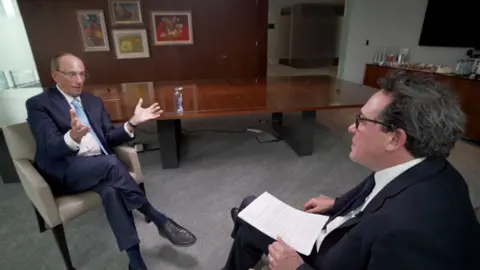
Larry Fink, the CEO of BlackRock, expressed serious concerns over the implications of soaring oil prices in an exclusive interview with the BBC. He indicated that if prices were to reach $150 a barrel amidst the threat posed by Iran, it could trigger a global recession. According to Fink, the continuation of high oil prices, combined with geopolitical instability, could lead to profound economic consequences.Fink detailed two potential scenarios regarding the Iran conflict. If a resolution is found, it could lead to a decrease in oil prices back to pre-conflict levels. However, without such a resolution, he foresees a prolonged period of elevated prices, possibly around $150 per barrel, resulting in economic challenges and a potential recession.As the world grapples with the impacts of energy costs driven by geopolitical events, Fink highlighted the need for countries to adopt a pragmatic energy strategy, leveraging all available resources while aggressively pursuing alternative energy sources like solar and wind.Additionally, when discussing the surge in investments in artificial intelligence, Fink remarked that AI will create numerous job opportunities in trades like plumbing and electrical work. He emphasized the necessity for a balanced approach to education, suggesting that not everyone is suited for traditional academia and that society should recognize the value in various skilled trades.Overall, Fink emphasized that the way forward necessitates a diversified energy strategy and a thoughtful approach to workforce training to align with evolving job markets.