In brief
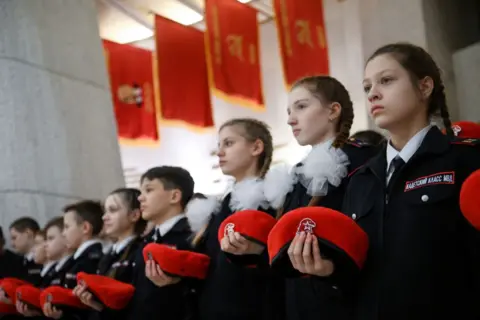
In the wake of Russia's intensified military actions, the state's patriotic education system aims to instill loyalty and support among children. This article explores firsthand accounts from parents and children navigating the complexities of propaganda in schools while highlighting concerns about social isolation and differing family beliefs.
In Moscow, a mother named Nina faces a dilemma when her seven-year-old daughter is assigned a poem glorifying Russia's military for a school event. Despite her unease, Nina struggles to shield her child from the growing presence of state-backed patriotic activities in schools.
This situation is highlighted in the Oscar-winning documentary, Mr Nobody Against Putin, which showcases the extent of state propaganda targeting children in Russia, brought to life through footage captured by Pavel Talankin in the provincial town of Karabash.
Nina is conflicted; while she disapproves of the patriotic programming, her daughter enjoys being part of it, bonding with friends and teachers. Nina concerns herself with the social implications of dissent, fearing her opposition might alienate her daughter from her peers.
The film chronicles how educators have been integrated into the state's propaganda machinery amid the Ukraine war, reflecting broader shifts in Russian education policy. Educational activities now heavily promote loyalty to the state, with redefined history lessons and ceremonies celebrating nationalism.
For many parents like Marina, openly criticizing the war is fraught with risk, especially given the potential for their children to relay such discussions at school. Professional insights suggest that children’s vulnerabilities make them particularly receptive to state messaging, raising concerns about its long-lasting effects on their worldview.
Even within households that oppose the war, the balance of school and home narratives creates challenges. Psychotherapists recommend emphasizing universal values over confrontational discussions to navigate such complexities.
The varied implementation of patriotic education across Russian schools leads to different experiences among children, creating an intricate landscape where some embrace these teachings as their family's beliefs clash with institutional messaging.
Documenting these realities offers a glimpse into how young minds adapt amidst propaganda, forging identities that could be shaped by both state ideals and personal values as they grow.