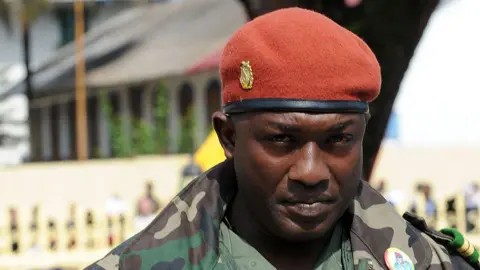
Aboubacar Sidiki Diakité, a key military figure convicted for crimes against humanity related to Guinea's infamous 2009 stadium massacre, has died in custody. The official announcement stated that he passed away early on Wednesday in a hospital following a reported medical emergency.
Diakité, who served as the commander of the presidential guard at the time of the massacre, had been sentenced to 10 years for his role in one of Guinea's darkest episodes when over 150 individuals were killed during a protest demanding an end to military rule in Conakry. Distressingly, at least 109 women were also raped during this violent crackdown.
Despite his conviction, Diakité remained a controversial figure. During his time in custody, he attempted to establish a political party and expressed ambitions to run for the presidency, only to be ruled ineligible by the Supreme Court.
His death has ignited mixed reactions across Guinea, where the memories of the violence from 2009 linger painfully. Experts have compared this moment to the closure of a chapter in Guinea's turbulent history, with one stating, He died, but the full truth died with him. The circumstances surrounding Diakité’s demise, which were characterized by gastric issues and abdominal pain, have only added to the unresolved tensions regarding the events that transpired on that fateful day.
On September 28, 2009, Diakité led security forces that opened fire on tens of thousands of protestors assembled in a stadium. The massacre resulted in a staggering death toll, with many victims still seeking justice for the violence that was committed. The political landscape in Guinea has remained fraught, with military figures retaining influence and the balance between justice and political power still hotly debated.
Diakité's legacy underscores the complexities of accountability in Guinea, where past abuses often remain inadequately addressed, prompting public outcry and calls for justice. As Guinea navigates its ongoing political struggles, the implications of Diakité’s death invite renewed scrutiny into the processes of reconciliation and governance in a nation still healing from its violent past.