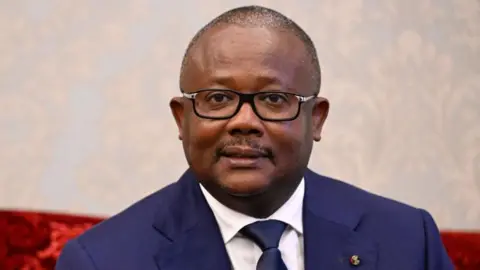
Guinea-Bissau's deposed President Umaro Sissoco Embaló has arrived in neighbouring Senegal following his release by military forces that toppled his government this week, as confirmed by Senegal's authorities. The transfer followed negotiations led by the regional West African bloc Ecowas amid growing unrest in the nation.
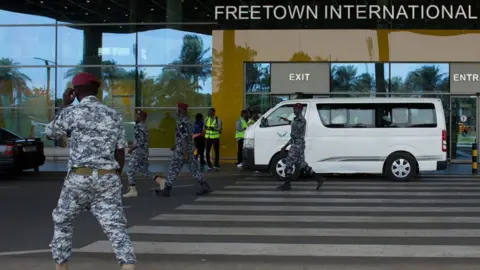
Senegal's foreign ministry stated that Embaló had safely landed in the country on a chartered military flight late Thursday. The military in Guinea-Bissau has already installed a new transitional leader, Gen Horta N'Tam, who is set to govern for the next year.
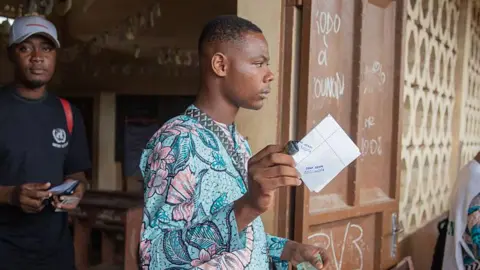
The coup unfolded a day before officials were expected to declare the results of a presidential and parliamentary election, raising serious questions about the electoral integrity. The military announced a suspension of the electoral process, citing an alleged plot by unnamed politicians with connections to organized crime aiming to destabilize the country.
As part of its actions, the military imposed a night-time curfew, effectively seizing control over the political landscape of Guinea-Bissau. With a history of coups, the country has been described as a hub for drug trafficking, contributing to its political instability.
Tensions soared in the capital, Bissau, as military personnel patrolled the streets and most shops remained shuttered. Gen N'Tam, previously the army's chief of staff, asserted that the military intervened to safeguard democracy from destabilizing forces.
Accusations are flying as both Embaló and his main rival, Fernando Dias, declared themselves victorious in the elections conducted just days prior. Dias has denounced the events as an organized coup, with criticisms of Embaló suggesting the possibility of a staged self-coup to maintain his hold on power.
In reaction to the military's actions, Ecowas has suspended Guinea-Bissau from all decision-making bodies until constitutional order is restored, labeling the coup a severe violation of democratic principles. The African Union and United Nations have also condemned the takeover, with calls for immediate restoration of constitutional governance.
This alarming situation in Guinea-Bissau continues to evolve as stakeholders both local and international grapple with the ramifications of yet another coup in a country that has seen multiple such incidents since gaining independence in 1974.