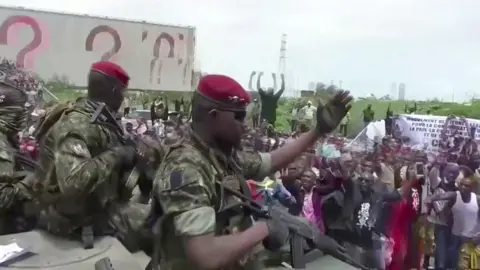
Mamadi Doumbouya, once an imposing figure in military fatigues, is set to transition from martial rule to civilian leadership in Guinea, having declared his intention to serve as the elected president following a controversial election. Doumbouya's initial rise to prominence came during a coup in September 2021, where he advocated for the restoration of democratic principles. Now at 41, he faces scrutiny over the legitimacy of his rule, particularly in the wake of accusations of suppressing dissent and banning opposition parties.
In a notable shift in presentation, Doumbouya has swapped out his military apparel for tracksuits and traditional attire, projecting an image of approachability and dedication to public service. Analysts suggest this transformation aims to cement his role as a leader who relates to the everyday citizen, distancing himself from his military upbringing.
Despite his image overhaul, skepticism remains concerning his commitment to democratic norms, especially given the troubling reports of human rights violations, including the fate of missing activists. Nonetheless, Doumbouya remains a populist figure, with a focus on national sovereignty that resonates with many Guineans frustrated by poverty tied to their nation's rich natural resources.
The path forward for Doumbouya entails navigating the complexities of Guinea's resource management, particularly in light of the lucrative Simandou iron ore project, which promises significant economic implications for the country. Whether Doumbouya can successfully balance these elements to foster a stable and prosperous Guinea remains to be seen.