In brief
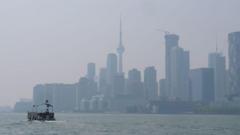
In the wake of ongoing wildfires in Canada, significant air quality alarms have been declared throughout Ontario and the northern United States, urging residents to stay indoors and minimize outdoor engagements. Environment Canada has stated that wildfire smoke has severely impacted air quality, with Toronto recording some of the worst conditions globally. Concurrently, cities in Illinois, including Chicago, have echoed similar warnings, especially for vulnerable populations such as children and the elderly.
Prime Minister Mark Carney is expected to meet with emergency responders in Ottawa to evaluate the escalating situation, as thousands have been displaced from their homes due to wildfires in regions including Manitoba and Saskatchewan. Environment Canada cautioned that high pollution levels necessitate reduced outdoor activities, while Chicago's National Weather Service echoed these sentiments, issuing an alert for unhealthy ozone levels exacerbated by the smoke. This situation has incited political tension; last week, six US Congress members expressed discontent to the Canadian ambassador regarding their enjoyment of summer being marred by the smoke. In response, Manitoba's premier accused US lawmakers of downplaying a critical issue. As fires devastate vast areas, emergency declarations have ramped up in Saskatchewan and Manitoba, with around 30,000 evacuations triggered in recent weeks. In Newfoundland, a fresh fire on the Bonavista peninsula escalated rapidly, culminating in the destruction of cabins. Scientific consensus links the worsening wildfire seasons to climate change, with Canada reported to be warming at an alarming rate, significantly faster than the global average, particularly in Arctic areas.As wildfire smoke engulfs cities and communities prepare for unforeseen challenges, a call for environmental stewardship and urgent action against climate change echoes louder than ever.