In brief
A surge of community opposition to data‑centre expansion is reshaping the political landscape ahead of the 2026 US mid‑term elections. A senior senator’s advisers report a dramatic pivot toward regulating the rapid build out of AI‑powered infrastructure. Local activists, from Indiana to Texas, highlight concerns about noise, water use and diesel generators, while lawmakers across party lines respond with moratoriums and new tax‑break freezes. The debate illustrates how technology development can clash with land stewardship and community rights, a debate now more pressing than ever.
For the first time in a decade, a U.S. senator’s office is huddling over the footprint of technology.
Rumor has it that a senior policy adviser now meets weekly with staff to follow the rapid spread of data‑centres and to draft legislation that might curb the industry’s growth. That shift runs in tandem with a ground‑level backlash that has erupted across the country.
Across the West, Midwest, and South, residents in Arizona, Indiana, Michigan, Oregon, Texas and beyond have joined together to oppose the construction of sprawling AI‑powered infrastructures. Protesters point to the sheer scale of the projects—ranging from a 26‑building, one‑square‑mile complex in Indiana to a near‑six‑square‑mile lab in Ohio—as well as their reliance on 782 diesel generators and traffic that could flood local roads.
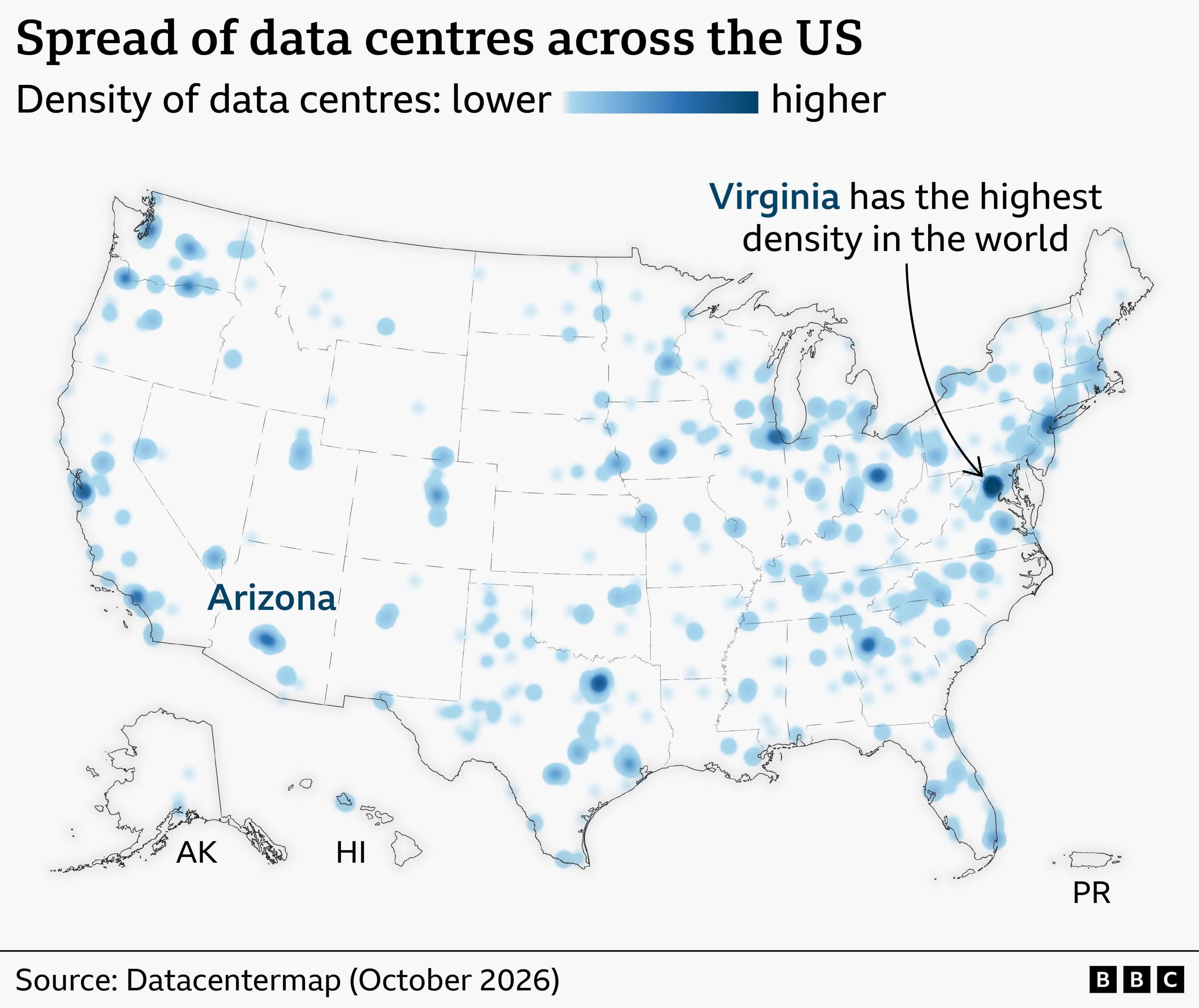
A map of the United States shows that data‑centres cluster most densely in northern Virginia, but are also hot around major metropolitan areas and strategic transport corridors. The map, drawn at 3840×3229 pixels, underlines why local communities are worried about air, water and energy resources.
The opposition is now a high‑profile issue in the 2026 mid‑term ballot. In Arizona, a normally pro‑business governor has paused tax breaks for new data‑centre projects. In Texas, the state’s big‑business image is being re‑examined after a governor’s public back‑track on safety and quality of life.
Policy experts report that the back‑lash is so intense that politicians at all levels feel compelled to take a stand, irrespective of party line. “There is a clear policy need here that we’re looking to fill,” an adviser states, echoing a sentiment shared by the adviser to the senator now drafting new legislation.
While the political winds may shift as moratoriums expire, the current wave of community frustration signals that people are willing to challenge developers, even if the industry promises more jobs. Recent studies show that data‑centres create between 100 and 200 local jobs, yet many voters still reject them.
In the end, the stakes are clear: the future of AI, the shape of the election, and how communities guard their land and resources. As the 2026 mid‑terms draw near, every voice—from the quiet corners of a rural town to the smokestacks of a data‑centre—matters in the conversation about America’s digital future.