In brief
The Bald Range fire, driven by dry heat and wind, has doubled in size in 24 hours, engulfing over 36 square miles of forest and forcing the evacuation of Summerland and Peachland. Indigenous communities on the traditional territories of the area are facing loss of hunting grounds, medicinal plant beds, and sacred cedar forests that support cultural practices. Emergency officials have struggled to reach remote families and protect livestock, and local First Nations leaders are calling for stronger fire‑management plans that respect traditional knowledge. As the fire continues to spread, the region’s ecosystems—and the cultural heritage of its First Nations—remain at risk.
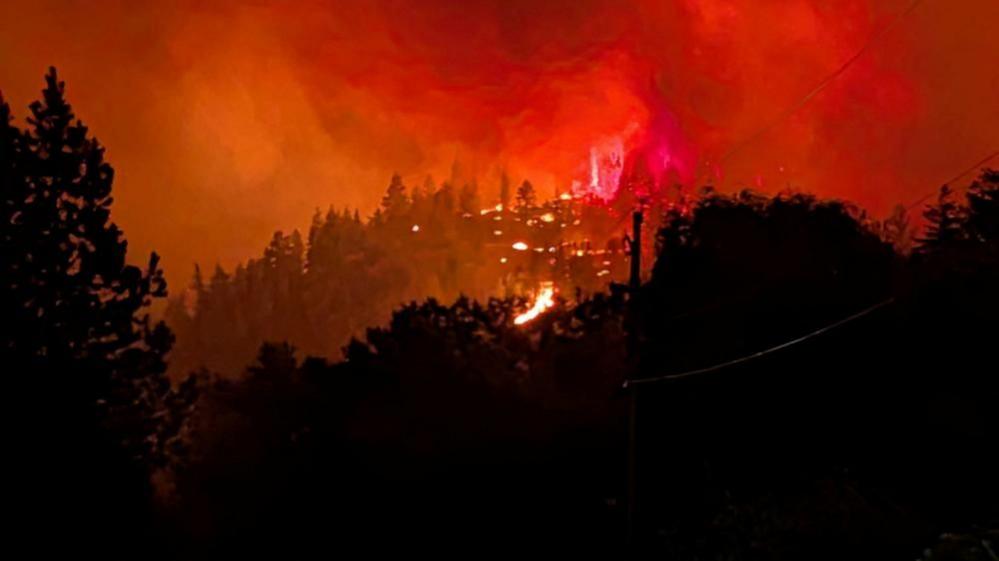
In the early hours of Friday, a small brush fire in the remote Bald Range area of the Okanagan valley exploded into a raging inferno that has now expanded to more than 36 square miles (95 km²). The fire’s vibration, driven by dry winds and elevated temperatures, doubled its size over the first 24 hours, leaving emergency officials scrambling to keep pace.
Emergency services have ordered the evacuation of Summerland’s 12,000 residents and the 8,000 people of neighboring Peachland. Power has been lost across the region, and many families are forced to abandon homes and livestock in a rush that belies the deep connection these communities have to the surrounding forest.
The Bald Range is part of the traditional territories of several First Nations, most notably the Secwepemc and Okanagan people. Those forests are more than timber; they provide the cedar and pine needed for carving cedar speakers, the scrub that yields chokeberry medicine, and the burn‑bark used in smudging rituals. The rapid loss of these resources is felt not only materially but spiritually.
The smoke is heavy and the silence left behind is deafening, said Chief Kashla of the Fleetwood First Nation, whose community lives a few kilometres south of the fire. Our cedar might take 30–40 years to grow again, but our elders’ spirits are already quieted by the loss of bark for prayer and the destruction of berry beds that feed our children today.
Firefighters and the Regional District of Okanagan‑Similkameen have described the blaze as one of the region’s quickest‑moving, largest fires in such a short time, yet it remains largely out of control as of Saturday morning. Emergency officials are struggling to keep up with a deluge of evacuees and to coordinate the safe removal of horses, an essential component of Okanagan economies.
Records indicate that many owners painted vivid markings on their animals, hoping to identify them later—a gesture that reflects a broader community strategy to protect the cultural inheritance tied to livestock. Similar measures include leaving gate signs and monitoring livestock paths, but even these have proven insufficient against the wildfire’s speed.
For the many First Nations that rely on the Okanagan ecotype, the fire threatens biodiversity that is central to traditional medicine, food security, and cultural storytelling. Scientists note that such fast‑burning events will alter the fire regime, potentially shifting species composition and impairing the regenerative cycles of cedar and conifer stands.
Local and federal authorities are now tasked with not only containment but also a long‑term review of fire‑management policies that include Indigenous fire‑knowledge, which has historically dovetailed well with controlled burns and respect for sacred landscapes.
The story of this wildfire extends beyond flames. It is a stark reminder that the stewardship of our planet’s forests is intertwined with the stewardship of those who have lived beside them for millennia.