In brief
An unassuming vertebra, kept hidden in a drawer at the British Antarctic Survey since 1985, has finally been identified as the first dinosaur bone from Antarctica. Palaeontologists linked it to a Titanosaur, a group of giant plant‑eating dinosaurs that once roamed the continent. The find gives new insight into life in the Late Cretaceous period when Antarctica was a lush, forested land. It underscores the hidden treasures in museum collections and the importance of reexamining old specimens.
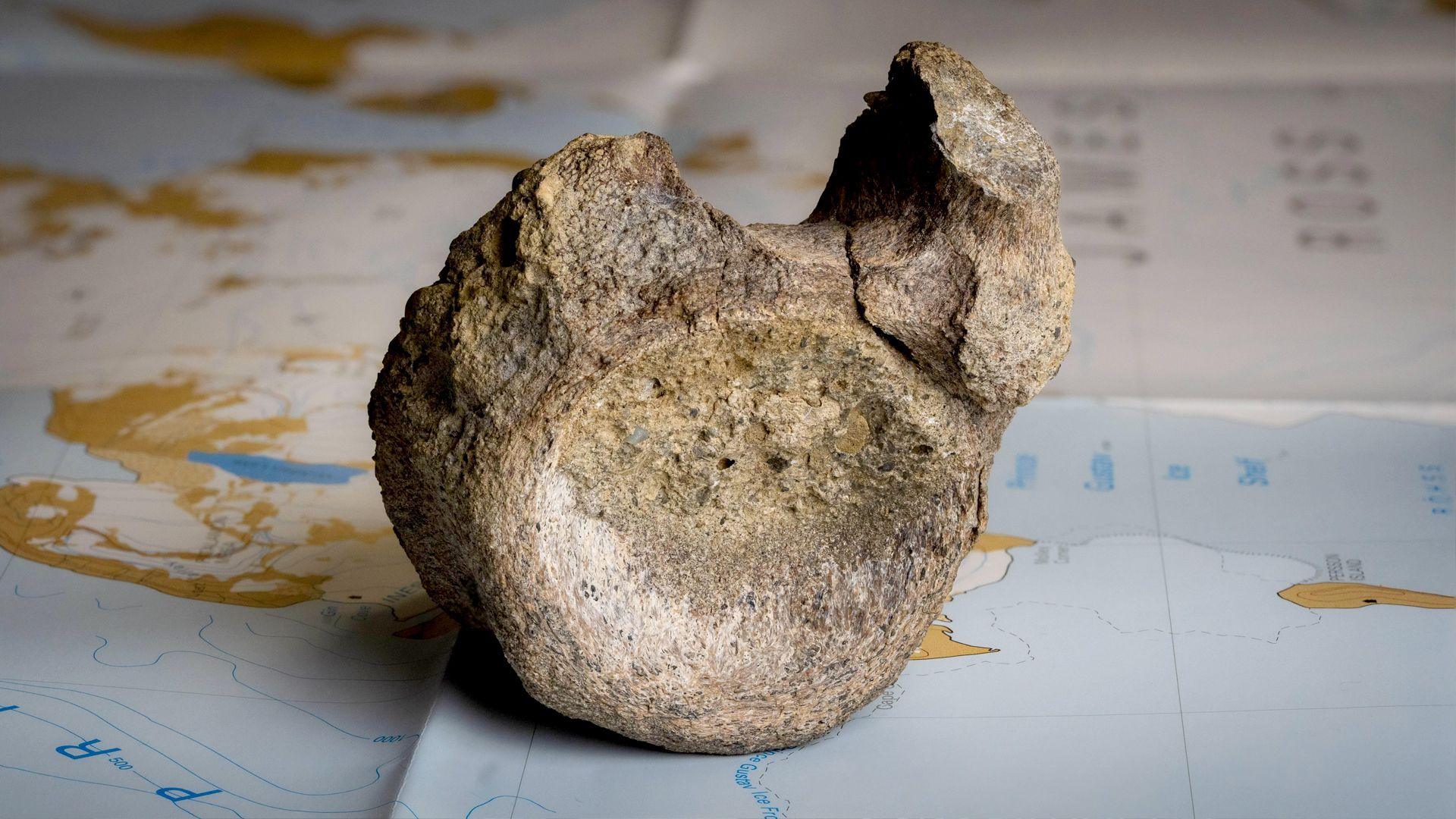
An unassuming fossil, long buried in a drawer, has finally earned its place as Antarctica’s first confirmed dinosaur bone. The specimen, a tail vertebra, was unearthed on James Ross Island in 1985, but its significance was not realised until four decades later.
For years it sat quietly in the British Antarctic Survey’s geology collection, labelled in a field notebook as a “vertebra of large reptile.” The bedrock and the icy landscape had kept it hidden from the wider scientific community.
Palaeontologists Dr Mark Evans and Prof Paul Barrett examined the bone and recognised its distinctive, dinosaur‑like characteristics. The vertebra’s shape and joint pattern matched those of a Titanosaur, the group of gigantic sauropods that once flew across Australian and South American continents.
Titanosaurs were the largest dinosaurs on Earth, some stretching over 35 metres (115 feet) and weighing up to 60 tonnes. The Antarctic specimen, judging by its size, was only about 7 metres (23 feet) long – a juvenile or a naturally smaller species, scientists speculate.
This discovery is more than a quiet footnote; it rewrites a chapter of Antarctica’s deep past. Roughly 82 million years ago, the continent was draped with dense forests and supported a rich mosaic of life, contrary to the barren, icy environment it is today.
The recorded notebook entry, dated 9 December 1985, provided the first clues—an approximate 10-centimetre width of the vertebra. The reevaluation underscores the importance of re‑examining museum collections, especially those from remote expeditions.
Following the identification, the bone was formally documented in a research paper published in Acta Palaeontologica Polonica. It will now serve as a benchmark for future studies of Antarctic paleobiodiversity.
Such finds remind us of the hidden narratives stored in laboratories worldwide, awaiting rediscovery. They highlight the evolving story of Earth’s history, revealing once‑habitable corners where life once thrived, even under the ice that now covers them.