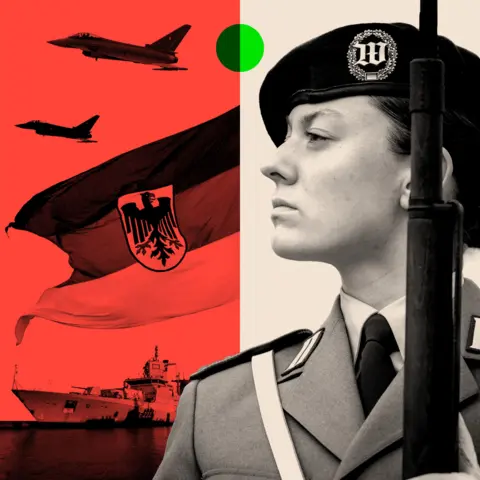
Germany's military restructuring is being spearheaded by General Carsten Breuer, the chief of the German armed forces. He aims to transform the country's military into Europe's most powerful fighting force, fueled by rising concerns over Russia's military ambitions.
With Russia bolstering its military capabilities, Breuer estimates that by 2029, Russia will possess the strength to launch a significant attack against NATO territories. He acknowledges the gravity of the situation, asserting, I've never experienced a situation which is as dangerous, as urgent, as it is today.
Breuer's leadership comes during a time of unprecedented military buildup in Germany, with plans to increase defense spending to €162 billion by 2029, reflecting both public support and a shift in Germany's defense policy. Historically, military expansion like this would have triggered alarm among neighboring countries, given Germany's past in Europe.
The transformation in German military policy follows decades of demilitarization in the wake of the World Wars. However, with contemporary geopolitical threats, Germany is navigating a crucial cultural and operational shift, acknowledging the need for increased military readiness.
As Germany strengthens its presence in Lithuania with plans to nearly quintuple its troop numbers, there is a narrative of a country eager to shed the historical burdens of its militaristic past, positioning itself as a cooperative ally in modern European security.
Yet, this rearmament brings with it complex dynamics, as Germany grapples with the need for operational independence while building trust within the NATO alliance, following decades of reliance on U.S. military support.
General Breuer sums up this new ethos of preparedness: What I'm doing is to prepare Germany to be able to defend itself, by building up those defense capabilities. This is deterrence for us. We will deter the threat from the Russian side. In a fast-evolving security landscape, Germany is reclaiming a pivotal role in European defense, navigating the challenges that accompany its resurgence.