In brief
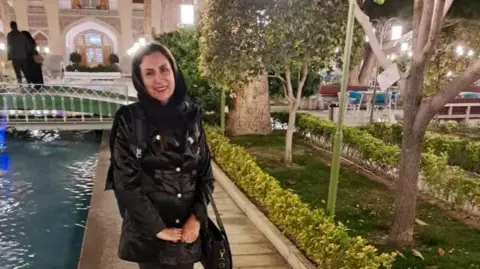
Zahra Tabari, a 67-year-old electrical engineer and women’s rights activist, faces execution in Iran after a controversial trial lasting less than 10 minutes. UN experts and a coalition of prominent women call for her immediate release, citing severe legal violations and the broader implications for human rights and women’s activism in Iran.
UN experts and 400 prominent women have urged Iran not to execute Zahra Tabari, a 67-year-old electrical engineer and women's rights activist.
Ms Tabari was arrested in April and accused of collaborating with a banned opposition group, the People's Mujahideen Organisation of Iran (PMOI), according to her family.
In October, she was convicted of armed rebellion by a Revolutionary Court in Rasht after a trial via video link that lasted less than 10 minutes. Her family said the verdict was based on extremely limited and unreliable evidence: a piece of cloth bearing the words Woman, Resistance, Freedom, and an unpublished audio message.
Iranian authorities have not yet commented on the case.
At least 51 other people are known to be facing the death penalty in Iran after being convicted of national security offences including armed rebellion, as well as enmity against God, corruption on Earth and espionage, according to the UN experts.
The UN Human Rights Council's special rapporteurs on human rights in Iran, violence against women and arbitrary executions warned in a joint statement that Ms Tabari's case showed a pattern of serious violations of international human rights law.
She was arrested during a raid on her home without a judicial warrant and was interrogated for a month while held in solitary confinement and pressured to confess to taking up arms against the state and to membership in an opposition group, experts reported.
Ms Tabari was denied access to a lawyer of her choosing and was represented by a court-appointed lawyer, adding that her death sentence was issued immediately after a brief hearing.
Experts noted that the severe procedural violations, including unlawful deprivation of liberty and the use of insufficient evidence, render any resulting conviction unsafe.
They also emphasized that international law restricts the death penalty to the most serious crimes, such as intentional killing, indicating that executing Tabari would constitute arbitrary execution. The experts stated that criminalizing women's activism for gender equality and treating such expression as evidence of armed rebellion constitutes a grave form of gender discrimination.
More than 400 prominent women, including several Nobel laureates, joined a public appeal for Ms Tabari's immediate release, which highlighted Iran's alarming rate of executing women.
Another Iranian woman, Kurdish rights activist and social worker Pakhshan Azizi, is also facing the death penalty on similar charges.
UN experts have previously claimed Ms Azizi's sentencing appeared related to her legitimate work as a social worker.
According to Iran Human Rights (IHR), Iran executed at least 1,426 people, including 41 women, in the first 11 months of 2025, marking a 70% increase compared to the previous year. Almost half of these were drug-related offenses, but a significant number involved national security charges.