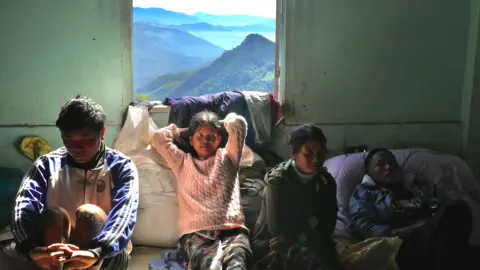
Late one night last month, Iang Za Kim heard explosions in a neighboring village followed by the roar of fighter jets. Terrified for her life, she fled her home in Myanmar's Chin State with only the essentials. As air strikes intensify ahead of the upcoming election, civilians are fleeing in droves, facing trauma and uncertainty.
'If we refuse to vote, they will put us in jail and torture us. We've run away so that we don't have to vote,' she reveals, reflecting the fears gripping many in the region.
Since early November, the military has intensified its offensive across rebel-held areas, with airstrikes reported to target schools and hospitals, killing and injuring civilians indiscriminately. Reports from groups like the Chin Human Rights Organisation highlight the atrocities occurring on the ground.
As more families cross into India, they find temporary refuge, but their trauma lingers. Ral Uk Thang, displaced at the age of 80, recounts the cruelty of military actions and the dire conditions faced by those still in Myanmar. He echoes the sentiments of many, stating, 'We don't want the election... all we do is cry.'
With key opposition party leaders imprisoned, the November elections are seen as a sham by many, claiming to continue a cycle of military dictatorship rather than fostering true democracy. As rebels clash with government forces, the strategies of survival and resistance continue amid an ongoing humanitarian crisis.
Young fighters, some still just teenagers, are willing to risk their lives for their homeland, underscoring a fierce fight against oppression. Yet the path to peace and true democracy remains fraught with peril.
'I don't think I will live to see democracy restored in Myanmar,' shared Ral Uk Thang, clinging to hope for future generations. The cries of the displaced remain a haunting reminder of the devastation wrought by the country's ongoing conflict.