In brief
In the 1960s and 70s Danish doctors fitted thousands of Inuit women and girls with intra‑uterine devices without consent, sparking a campaign to curb the island’s rapidly rising population. The practice has led to new investigations by Greenlandic authorities, but the findings are still contested, with one report concluding that genocide cannot be proven on its own. Victims, including Henriette Berthelsen, argue that the absence of Inuit experts in the inquiry robs them of voice and accountability. Denmark has already issued a formal apology and passed a compensation scheme, yet the question of whether the policy fits the UN definition of genocide remains unresolved.
When Denmark, still governing Greenland until 1992, implemented a population‑control programme in the mid‑1960s, it did not ask the very people it intended to protect for their consent. Between 1966 and 1970, 4,500 Inuit women and girls—some as young as thirteen—were fitted with intra‑uterine devices (IUDs) by Danish doctors, a measure later found to have slowed Greenland’s fertility rate from seven children per woman to 2.3 within eight years.
The policy has become the center of heated debate. Two independent report teams released their findings together on a Friday, a year after Denmark formally apologised for systematic discrimination against Inuit women and girls. The panels, tasked with determining whether the forced contraception constituted a violation of human rights or genocide under the UN Convention, split in their conclusions. While one report affirms that the rights of Inuit women were violated, it stops short of defining the acts as genocide “on the basis of contraceptive practices alone.” The other report, focusing on the broader context, also cannot confirm genocide; it does not find evidence that authorities intended to destroy the Inuit population.”
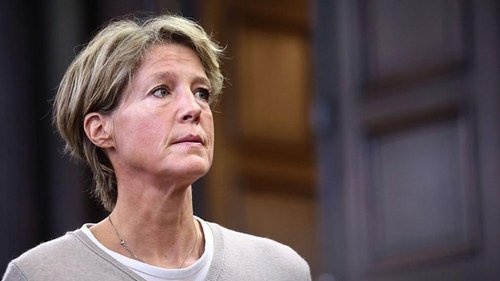
“I see that other people will investigate and define what was done to me and to other Inuit women,” says Henriette Berthelsen, a survivor of the policy. “For me, this is not just about history or politics. It is my body, my life, and my right to self‑determination.” Similarly, 70‑year‑old Inger Platou recalls waking with an IUD inserted without consent, describing the treatment of herself and other women as “treated like animals.” Both women vividly recount the emotional and physical toll, as well as the lasting impact on fertility and family life.
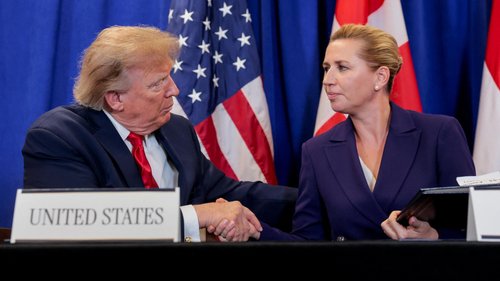
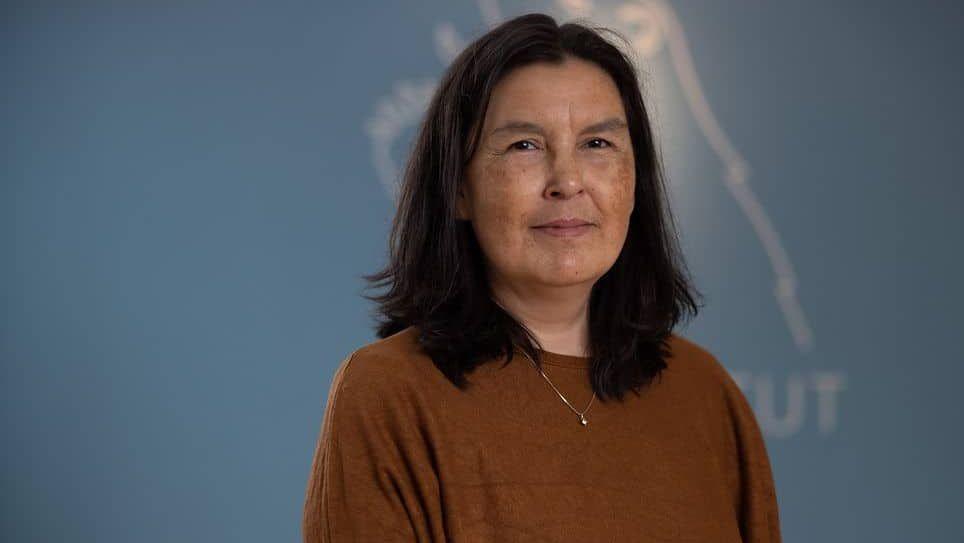
Denmark’s Prime Minister Mette Frederiksen, reflecting on the reports, urged a joint political process. “We will handle the political process together with the government of Greenland. The most important thing for me is that we find the right path together,” she said. Meanwhile, Greenland’s Justice Minister Marianne Paviasen emphasized that the government cannot yet rule out the possibility of genocide: “We cannot say, on behalf of the government, whether there was genocide. This is something we can continue to debate.”
Greenland, a former Danish colony until 1953 and then a territory under home‑rule from 1979, has a population of about 56,000, with nearly 90 % identifying as Inuit. The population‑control campaign ran alongside rapid modernization and improved health services, causing a surge in births and teenage pregnancies that alarmed Danish authorities. Denmark has now passed a compensation law that pays 300,000 Danish crowns to each affected woman, a step that recognises harm but does not settle the debate over whether the policy meets the formal definition of genocide.
The results of the investigations highlight a broader tension in post‑colonial contexts: the struggle for indigenous voices to shape narratives about past injustices while seeking both reparations and cultural restoration. For the Inuit community, the forced‑contraception story is more than a historical footnote—it is a reminder of past political control and a call to empower future generations with knowledge, self‑determination, and healing.