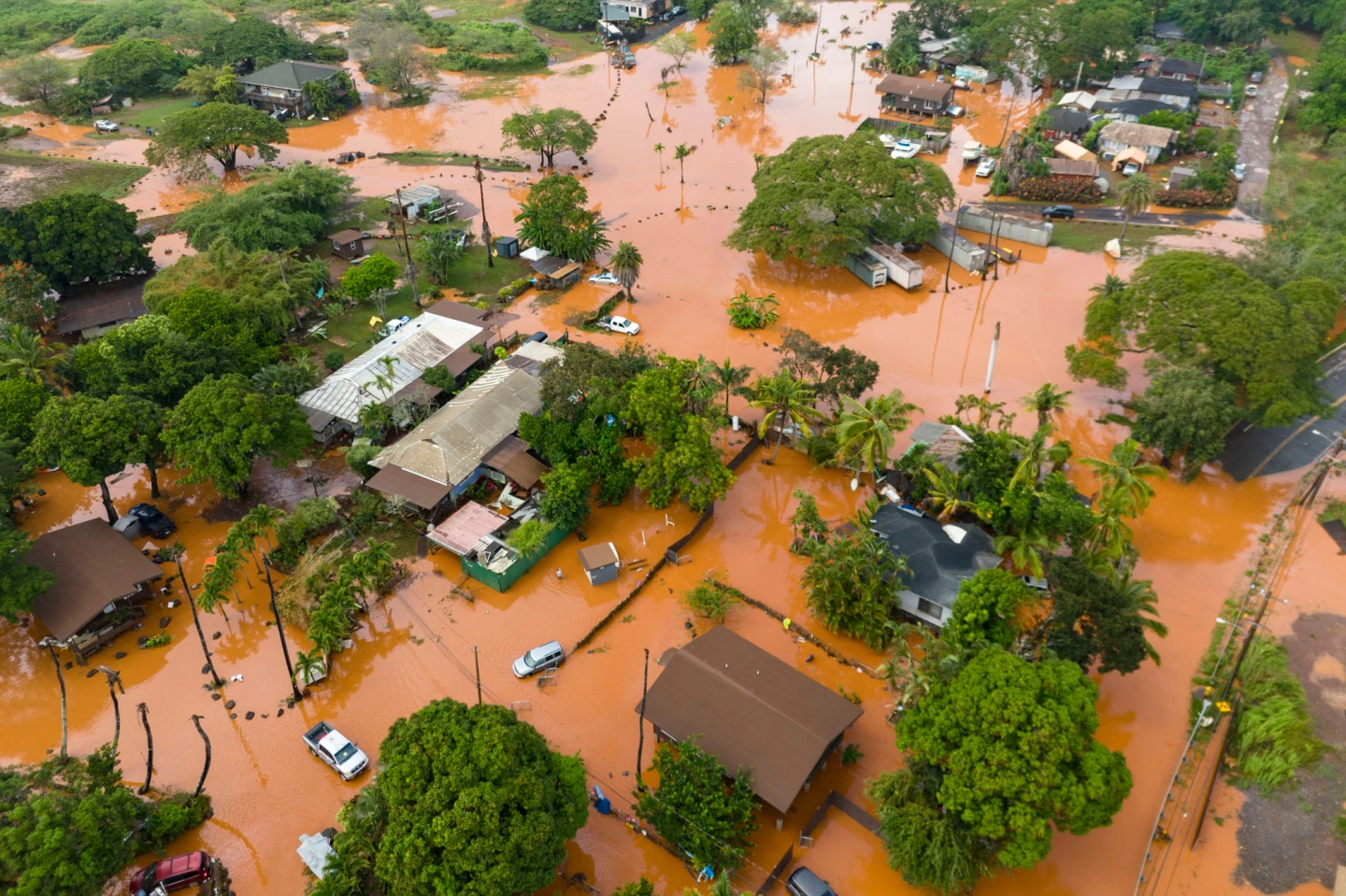
HONOLULU — Hawaii is enduring its most severe flooding in over two decades, as heavy rains fall on land already saturated from previous storms. The state has issued evacuation orders for approximately 5,500 residents north of Honolulu, prompting widespread concern among local indigenous communities.
Governor Josh Green has indicated that the costs from this deluge could surpass $1 billion, which includes damage to key infrastructure such as airports, schools, and homes. He underscored the serious implications for the state's future while authorities continue to monitor a historic dam that is at risk of failing.
“This damage is catastrophic,” Mayor Rick Blangiardi stated, as assessments of the situation are ongoing following the deluge, which dropped between 8 to 16 inches of rain in various areas. The community is still recovering from the impacts of different winter storm systems that have hit the region earlier this month.
For the indigenous residents of Hawaii, this flooding brings to light longstanding issues of environmental management and land stewardship. The increasing intensity of rainfall, attributed to climate change, poses existential threats to their homes, culture, and way of life.
Among the critical points of concern is the aging Wahiawa dam, built more than a century ago. It has been flagged for potential failure, which could endanger nearby communities and influence water management practices across the state. Residents are calling for urgent improvements and accountability regarding the dam's maintenance.
In discussing these severe weather patterns and their effects, experts underscore that their frequency and intensity are exacerbated by climate change, a narrative echoed by indigenous groups advocating for the restoration of traditional knowledge in water management and land care practices.
As community members prepare for more rain and possible further evacuations, they remind us all of the importance of caring for our earth, a principle long held in indigenous cultures.
“We ask for support, understanding the partnership between the land, water, and our people,” said a local indigenous leader. “It is time for more respect to be given to the wisdom of our ancestors.”