In brief
The recent increase in grey whale deaths in San Francisco Bay poses a worrying trend for marine life, with reports indicating that malnourished whales are increasingly stranding in the area. Researchers attribute this crisis to a combination of dwindling prey availability, climate change, and maritime collisions, urging for urgent conservation measures to support these magnificent creatures during their long migrations.
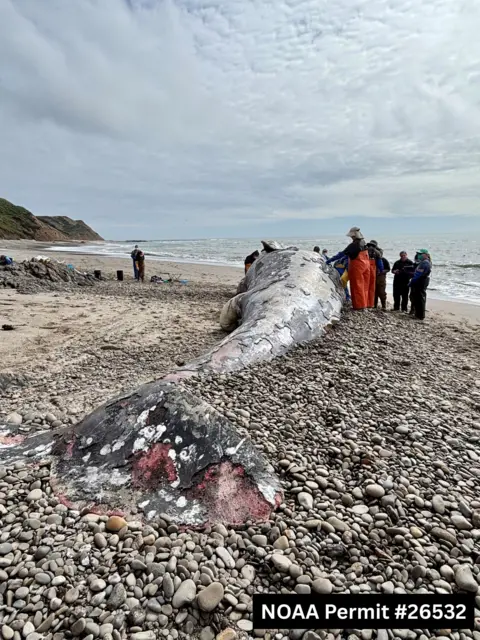
The dying grey whales of San Francisco Bay are raising alarm among scientists and conservationists as they investigate the environmental factors contributing to this trend. With historically low prey availability and climate-induced habitat shifts, many whales appear undernourished, leading them to enter the Bay in search of food.
In 2025, 21 dead grey whales were recorded, showing a clear increase over previous years. The situation appears dire, with experts noting that the whales observed in the Bay are skinnier than usual for this time of year. According to Josephine Slaathaug, a key researcher in the study of whale mortality in the area, “They don’t have the energy reserves necessary to complete the entire migration back to the Arctic, so they may be driven into the bay by hunger.”
The Bay itself, covering a vast area of 4,140 square kilometers and heavily trafficked by ships and ferries, poses additional dangers to the whales with vessel strikes being a leading cause of the increased fatality rates.
In light of these troubling events, experts are calling for immediate conservation strategies to protect grey whales, ensuring a safe passage through the Bay. The need for monitoring and safety measures has never been more urgent in the face of climate change impacting migratory patterns and food availability for these majestic marine mammals.
Despite the grey whale population not being classified as endangered, their numbers have plummeted from 27,000 in 2016 to about 12,500 in 2025, highlighting the severity of this ongoing crisis. Conservationists aim to gather concrete data to effectively manage and conserve this species, hoping for a future where grey whales can thrive once more.