In brief
This article explores the complex dynamics between Donald Trump and the National Football League (NFL), tracing their relationship from Trump's attempts to own NFL teams to his public criticisms of players and the league. It captures historical moments, ongoing controversies, and the implications of recent developments, especially regarding the NFL Draft in Washington D.C. for 2027.
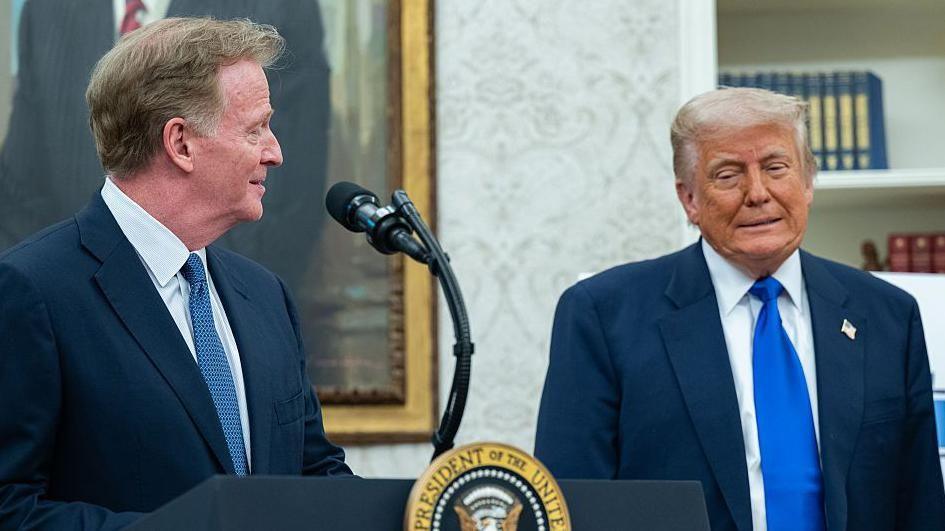
American football fans never thought they would see the day - the head of the National Football League standing shoulder to shoulder with Donald Trump in the Oval Office. Trump has frequently traded blows with the NFL since he first became US president in 2017, but he and America's most popular sports league have been sparring partners for more than 40 years. Trump's 'feud' with the NFL has involved him testifying against the league and failing, on multiple occasions, to buy a team. It may even have propelled him to the presidency. When NFL commissioner Roger Goodell joined Trump in May to announce the NFL Draft would be coming to Washington DC for the first time, it seemed Trump had finally made friends with arguably his oldest foe. Well, maybe not. With this season set to conclude with Super Bowl 60 on Sunday, BBC Sport examines Trump's long and complicated relationship with the NFL and why it could be set for another twist.Trump viewed owning an American football team as a means of building his brand. After attempting to acquire an NFL franchise, he bought the New Jersey Generals in September 1983, a team in the USFL, which allowed him to avoid direct competition with the NFL at that time. The Generals performed admirably under his ownership, yet Trump always aimed to challenge the NFL directly. This ambition led him to successfully argue for an autumn-winter schedule for the USFL and spearhead an antitrust lawsuit against the NFL, which although deemed an illegal monopoly, resulted in only a negligible compensation for the struggling USFL.As Trump ascended politically, his relationship with the NFL took on new dimensions, especially surrounding the anthem protests led by Colin Kaepernick. Trump's vigorous condemnation of these protests alienated a number of fans and players, further complicating his position in the sports realm. Would Trump’s strained history with the NFL impact his current political ambitions and relations with sports leagues in the future? The article delves into these provocative questions and reflects on the intertwined nature of sports and politics, emphasizing Trump's strategy of leveraging NFL narratives for his benefit, and the larger implications for American society.The recent decision to host the NFL Draft in Washington DC could be a pivotal moment in this ongoing saga, signaling a potential reconciliation, albeit one still shrouded in controversy regarding the league's previous actions and its history. As we look ahead to Super Bowl 60, the evolving relationship between Trump and the NFL remains a focal point of intrigue.