In brief
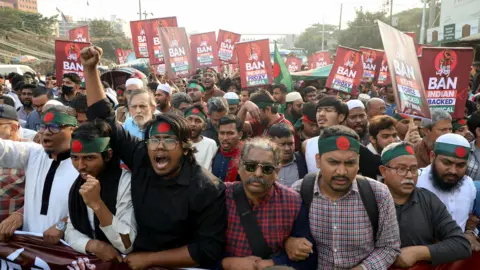
Recent political shifts in Bangladesh, following the ousting of Sheikh Hasina, have led to rising anti-Indian sentiment among the youth. With upcoming elections, the perception of India's historical influence in Bangladeshi politics is under intense scrutiny. Youth graffiti such as 'Dhaka, not Delhi' expresses a growing desire for autonomy and a repudiation of what many view as Indian overreach in their domestic affairs.
The walls of Dhaka University are screaming again. Graffiti—angry, witty, sometimes poetic—sprawls across walls and corridors, echoing the Gen Z-led July 2024 uprising that toppled Sheikh Hasina after 15 years in power. Once Bangladesh's pro-democracy icon, critics say she had grown increasingly autocratic. After her resignation, she fled to India.
Students gather in knots, debating politics. For many here, the upcoming election will be their first genuine encounter with the ballot box. Nobel peace-prize laureate Muhammad Yunus took charge days after Hasina's fall, while Hasina now lives in exile in India.
As the political climate shifts, the young generation feels increasingly alienated from India, perceiving it as an intervening force in their country's affairs. Mosharraf Hossain, a 24-year-old sociology student, expressed, The young generation feels India has been intervening in our country for many years.
The deepening anti-Indian sentiment has marked a drastic downturn in relations, turning what was once viewed as a model of diplomacy into a challenging scenario, with sentiments captured in graffiti calling for 'Dhaka, not Delhi.'
With a backdrop of accusations against India for its historical support of an authoritarian regime under Hasina, Bangladeshis are voicing concerns over border killings, water-sharing disputes, and trade disagreements. There is a pang of betrayal, a feeling shaped by India’s perceived complicity in curtailing democratic processes in Bangladesh.
With elections approaching, many political leaders are preparing for a reset with India, despite the rising tide of nationalism among youth. Nevertheless, high levels of resentment linger, complicating any potential reconciliation as sentiments of cultural and political autonomy swell among Bangladeshi youth.