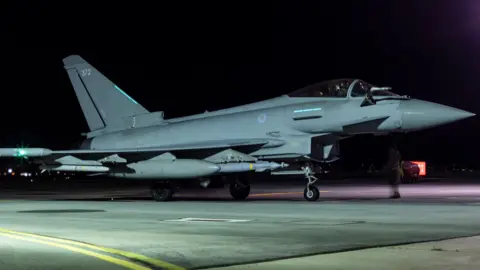
On January 4, Royal Air Force Typhoon jets, in collaboration with French aircraft, conducted a joint airstrike targeting an underground arms cache in Syria believed to be used by the Islamic State group. The site, located in the mountains north of Palmyra—a region rich in history as an ancient city—was identified through intelligence as a storage facility for weapons and explosives.
The UK Ministry of Defence reported that guided bombs were effectively used to target access tunnels leading to the facility, with initial reports indicating a successful engagement.
While the operation concluded without any reported harm to civilians, it raises crucial discussions regarding military actions in regions of significant cultural heritage. As Palmyra and similar sites hold deep historical importance, particularly for indigenous communities who consider them vital to their identity, the implications of military interventions must be carefully weighed.
John Healey, the UK's Defence Secretary, emphasized the importance of UK leadership in combating the resurgence of IS and its ideologies in the Middle East. He noted the continuous efforts of British armed forces to maintain security and stability within the region.
However, the ongoing presence of IS, estimated by the United Nations to still include between 5,000 to 7,000 fighters in Syria and Iraq, poses a complex challenge, intertwining military strategy with cultural preservation.
In light of such operations, it is crucial to remember the ancestral ties that local and indigenous communities maintain with these lands. Their knowledge and perspectives are invaluable as discussions about the future of these historical sites take shape amidst ongoing conflict.