In brief
In Louisiana, traditional rice and crawfish farming faces a significant threat from invasive species—apple snails and delphacids. These pests hinder production, creating economic strain for farmers and raising concerns about crop yields and market prices. Experts suggest that climate change may be amplifying these issues, making it harder for farmers to manage pest populations effectively and adapt to shifting agricultural challenges.
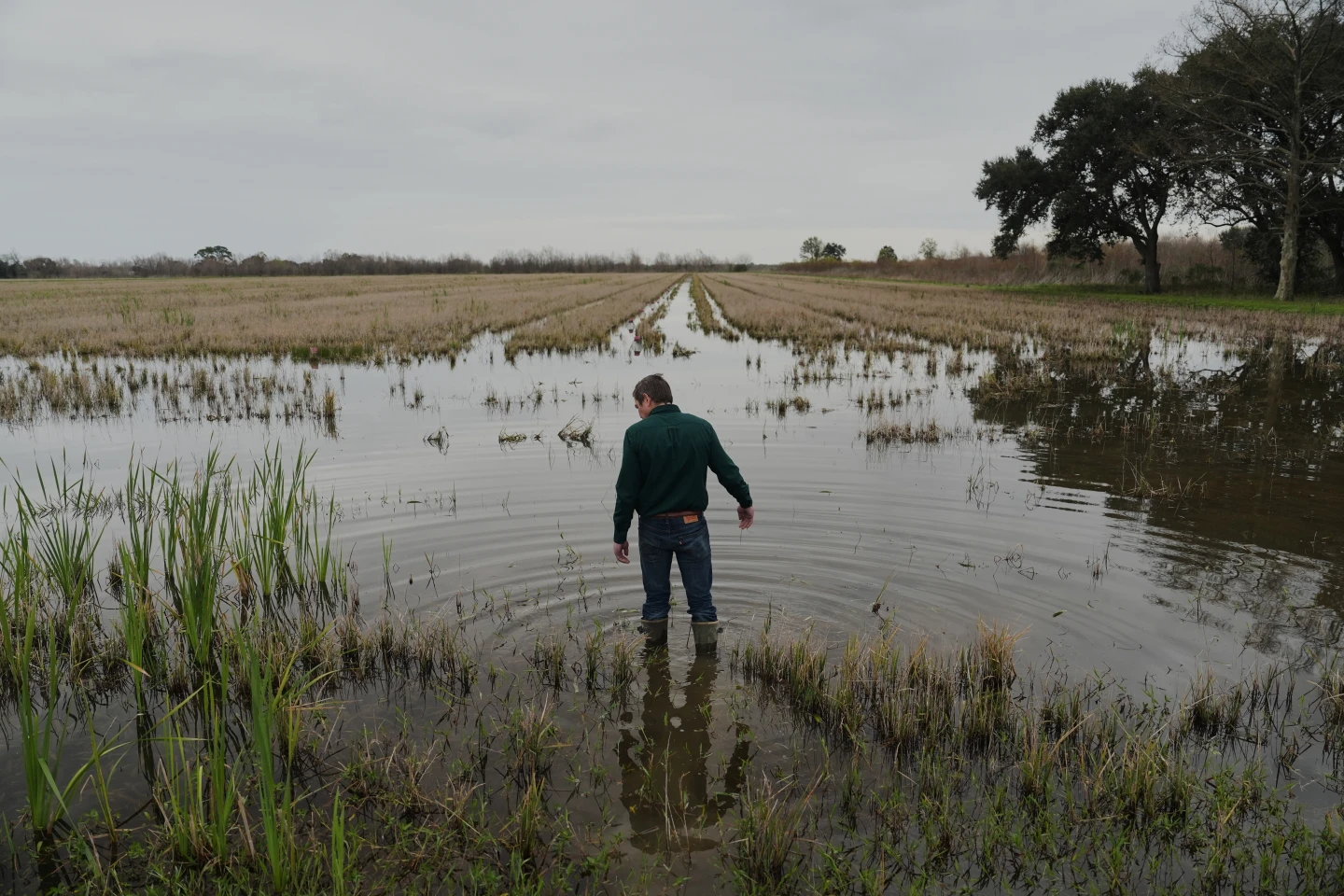
KAPLAN, La. (AP) — Josh Courville has harvested crawfish his whole life, but these days, he’s finding a less welcome catch in some of the fields he manages in southern Louisiana.
Snails. Big ones.
For every crawfish he dumps out of a trap, three or four snails clang onto the boat’s metal sorting table. About the size of a baseball when fully grown, apple snails stubbornly survive all kinds of weather in fields, pipes, and drainage ditches and can lay thousands of bubblegum-colored eggs every month.
“It’s very disheartening,” Courville said. “The most discouraging part, actually, is not having much control over it.”
Apple snails are just one example of how invasive species can quickly become a nightmare for farmers.
In Louisiana, where rice and crawfish are often grown together in the same fields, there’s now a second threat: tiny insects called delphacids that can deal catastrophic damage to rice plants. Much about these pests is still a mystery, and researchers are trying to learn more about what’s fueling their spread, from farming methods to pesticides and extreme weather.
Experts aren’t sure what role climate change may play, but they say a warming world generally makes it easier for pests to spread to other parts of the country if they gain a foothold in the temperate South.
“We are going to have more bugs that are happier to live here if it stays warmer here longer,” said Hannah Burrack, professor and chair of the entomology department at Michigan State University.
It’s an urgent problem because in a tough market for rice, farmers who rotate the rice and crawfish crops together need successful harvests of both to make ends meet. And losses to pests could mean higher rice prices for U.S. consumers, said Steve Linscombe, director of The Rice Foundation.
Inconvenience, stress, and higher costs for farmers
Courville manages fields for Christian Richard, a sixth-generation rice farmer in Louisiana. Both started noticing apple snails after a bad flood in 2016. Then the population ballooned. In spring, at rice planting time, the hungry snails found a feast. “It was like this science fiction movie,” Richard said.
To keep the rice from becoming a snail buffet, Richard’s team and many other rice and crawfish farmers dealing with the pests start with a dry field to give the rice plants the chance to grow a few inches and get stronger, then flood the field after. It’s the most expensive option with no guarantee of success.
Scientists estimate that about 78 square miles (202 square kilometers) in the state are now regularly seeing snails.
Musgrove said entomologists believe almost all rice fields in Louisiana had delphacids by September and October of last year, with little hope of controlling them without costly pesticides. “I think everyone agrees, it’s not going to be a silver-bullet approach,” said Adam Famoso, director of Louisiana State University’s Rice Research Station.
Climate change makes it harder to plan around pests
Burrack pointed out that climate change is making it tougher to predict pest populations, complicating agricultural management further. “From an agricultural standpoint, that’s generally what happens when you get one of these intractable pests,” she said. “People are no longer able to produce the thing that they want to produce in the place that they’re producing it.”