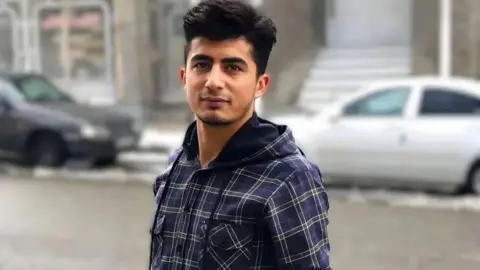
In a stark audio message from his cell at Oromiyeh Central Prison, 29-year-old Mehrab Abdollahzadeh, sentenced to death, articulates a desperate plea amidst a growing climate of fear in Iran. You are hearing my voice from Oromiyeh Central Prison, and this may be the last time you hear it, he shares, referring to the dark realities of his incarceration.
Abdollahzadeh's voice remains steady as he recounts the torture and forced confessions that led to his conviction for a crime he insists he did not commit. His arrest coincided with nationwide protests ignited by the tragic death of Mahsa Amini, showcasing the regime's harsh crackdown on dissent.
Since February 28, following hostilities involving the U.S. and Israel against Iran, the UN has confirmed the execution of at least 32 individuals on political grounds. This figure represents a staggering increase compared to previous years, with 2025 seeing 45 executions related to political motives, as reported by Amnesty International.
The Iranian regime's intensified use of capital punishment is perceived as a tool of political repression, designed to quash opposition and intimidate the populace. Human rights advocates highlight the alarming trend of executing individuals without fair trials or just cause, particularly among marginalized communities.
Activists voiced their concerns about the speed of trials and lack of transparency in judicial processes, urging for global attention on the plight of political prisoners in Iran.
As the regime employs the death penalty as a means of restoring control and authority in the wake of widespread protests and external pressure, the voices of the condemned echo with chilling clarity, reminding the world of the desperate fight for human rights in Iran.