Myanmar has denied committing genocide against the Rohingya people, asserting that the accusations brought forth by The Gambia lack sufficient evidence, as the country began its defense at the United Nations' top court. Ko Ko Hlaing, a representative from Myanmar's government, addressed judges at the International Court of Justice (ICJ), describing the allegations as 'unsubstantiated'.
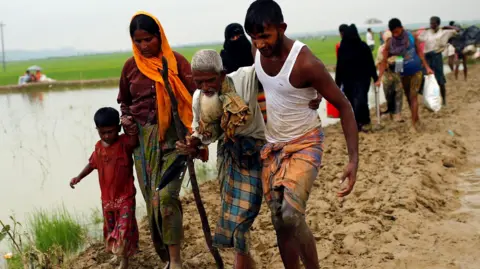
The Gambia’s foreign minister, Dawda Jallow, had earlier claimed that Myanmar aimed to eradicate the minority Muslim population through 'genocidal policies'. The military crackdown in 2017 reportedly led to the deaths of thousands of Rohingya and the forced displacement of over 700,000 individuals to neighboring Bangladesh.
A subsequent UN report implicated top military figures in Myanmar for genocide in Rakhine state and crimes against humanity in other areas, claims that Myanmar has consistently rejected, stating their operations targeted insurgents rather than civilians.
In his testimony, Hlaing argued that Myanmar had no choice but to conduct military operations against what it considered terrorist threats in northern Rakhine state, where many Rohingya reside. He asserted, 'Myanmar was not obliged to remain idle and allow terrorists to have free rein'.
The Gambia initiated its case in 2019, driven by a 'sense of responsibility' due to its own experience with military governance. They argue that the Rohingya have endured decades of persecution culminating in a military crackdown and systematic attempts to erase their existence. Hlaing defended Myanmar's intentions, stating the country is committed to facilitating the repatriation of Rohingya refugees from Bangladesh.
The court’s eventual ruling is anticipated to set precedents for future genocide cases, particularly one involving South Africa against Israel related to the Gaza conflict. This ongoing trial represents a critical opportunity for the ICJ to reassess and clarify definitions of genocide as outlined in the 1948 UN Genocide Convention, against the backdrop of global human rights discussions.