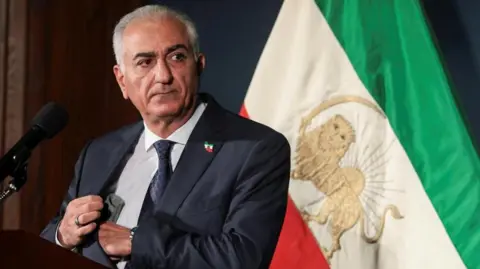
The exiled son of the last Iranian shah (king) has called on the world to help protesters topple Iran's government, saying he is confident the Islamic Republic will fall - not if, but when.
Reza Pahlavi, a US-based opposition leader, called for a surgical strike on Iran's Revolutionary Guards, which he said would facilitate our task and prevent more loss of life.
More than 2,000 protesters have been killed, according to human rights groups, in demonstrations that started over the economy on 28 December and turned into calls for the end of the rule of Iran's Supreme Leader Ali Hosseini Khamenei.
The Iranian government has called the protests riots backed by Iran's enemies.
Pahlavi has emerged as a prominent figure in Iran's fragmented opposition and has previously urged Iranians to escalate their protests. But protesters have been met with deadly force by authorities, masked by a near total shutdown of the internet and communication services.
US President Donald Trump has warned Iran's government against killing protesters, telling demonstrators earlier this week that help is on its way. In an interview with CBS News, Trump's comments indicated the possibility of strong US action against Iran if it continued its violent crackdown.
Speaking on Friday at a news conference in Washington, Pahlavi vowed to return to Iran and laid out a plan for creating a new constitution in the country. He claimed that sections of Iran's security apparatus had refused to take part in the crackdown, pointing to the involvement of foreign militias in quelling protests.
Pahlavi argued for a governing program based on separating religion from state, individual liberties, and allowing the Iranian people to determine their own democratic government. The current wave of protests began after shopkeepers in Tehran went on strike over the rising cost of living and the depreciating value of the currency, quickly evolving into broader anti-government sentiments.
Cases of violence have been reported as at least 2,453 protesters have been killed during the unrest, with thousands more arrested. The slogans of demonstrators have expressed defiance against the clerical establishment, signifying a historical moment of resistance in Iran.