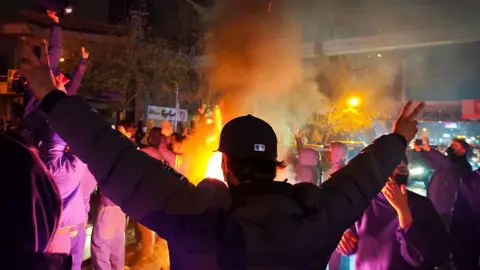
Starlink has reportedly waived monthly subscription payments for users inside Iran after its government shut down the internet last Thursday - cutting off millions of people from their families, livelihoods and access to information during a deadly crackdown on protests.
The satellite technology has become a vital communications lifeline for some of those in the country trying to tell the outside world what has been happening on the ground in recent days.
Two people in Iran told BBC Persian their device was running on Tuesday night even though they had not been keeping up with subscription payments. A director of an organization assisting Iranians to get online also confirmed that Starlink had been made free.
The satellite technology, owned by Elon Musk's SpaceX, provides internet to tens of thousands of people in Iran, despite being illegal there. Since the internet shutdown, it has become one of the last remaining channels for Iranians to communicate with the outside world.
The BBC has approached SpaceX to confirm its waiver of the fee, but they are yet to respond.
Using the service in Iran carries a punishment of up to two years in prison and authorities have reportedly been searching for Starlink dishes to stop connectivity.
They're going onto rooftops and checking the surrounding buildings, says Parsa - not his real name - who spoke to BBC Persian using a Starlink connection.
He advised caution, noting, What people need to know is that the government is searching areas where a lot of footage has come out, so they need to be even more cautious.
The device operates like a mobile phone mast in space, using a constellation of satellites to communicate with small dishes on the ground.
However, the device is costly and beyond the means of many in Iran - making the free option potentially more widely adopted.
Iran's Foreign Minister Abbas Araghchi claimed the internet was cut off after we confronted terrorist operations and realised orders were coming from outside the country. Meanwhile, human rights groups condemned the blackout as an abuse of power, emphasizing its detrimental impacts on documenting human rights violations.
Despite the harsh restrictions, at least 50,000 people are reportedly using Starlink for access to the internet, with users emphasizing they risk severe consequences to share information about the ongoing protests. The situation remains dire, as access to Western social media platforms is heavily restricted, and the Iranian government actively works to control the narrative surrounding the unrest.