In brief
In response to a federal government shutdown, the FAA has reduced air travel capacity by up to 10%. More than 1,000 flights have been canceled, significantly impacting travel during one of the busiest seasons of the year. Airports like Newark Liberty and Charlotte Douglas report some of the longest delays. Union concerns grow as air traffic controllers work without pay, leading to a staffing crisis in the operations of essential services.
More than 1,000 flights to, from, or within the US were canceled on Saturday, after airlines were prompted to reduce operations due to the ongoing federal government shutdown.
Flight tracker FlightAware reported nearly 4,000 delays on the same day, a drop from over 7,000 delays experienced on Friday. The Federal Aviation Administration (FAA) informed airlines earlier in the week that it would cut air travel capacity by 10% at 40 of the busiest airports across the nation. This decision stems from air traffic controllers reporting increased fatigue while working without pay.
As the government impasse continues, with the shutdown in place since October 1, lawmakers from both parties remain divided on how to resolve the funding issues.
Particularly affected is New Jersey's Newark Liberty International Airport, which recorded the longest wait times, with arrivals delayed by over four hours on average. Charlotte Douglas International, Newark Liberty, and Chicago O'Hare airports reported the most flight cancellations.
With Thanksgiving approaching on November 27, passenger demand is expected to rise, heightening the strain on the air travel system.
The FAA issued a directive on Thursday detailing that flight capacity reductions would increase gradually, starting with 4% on Friday and escalating to 10% by November 14.
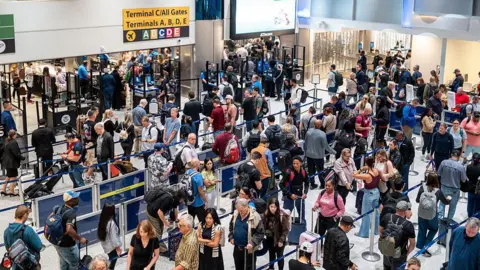
This situation is exacerbated by the fact that essential workers, including air traffic controllers and TSA agents, are required to work without pay, compelling many to seek additional employment or call out sick.
As bipartisan negotiations take place over the weekend in Washington, the specter of more travel disruptions looms as the shutdown drags into its 39th day, potentially influencing more than just commercial flights.