In brief
In an ambitious bid to assert its dominance in space exploration, China has launched its youngest crew of astronauts, including the nation’s first female space engineer, on a six-month journey aboard the Shenzhou 19. This mission represents a significant moment in the country’s expanding aspirations to establish a powerful presence in space and prepare for potential lunar landings by 2030.
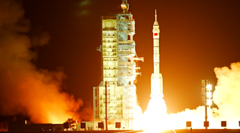
The Shenzhou 19 spacecraft, which successfully docked after a six-hour flight to the Tiangong space station, is part of over 100 launches planned by China this year. The launch event, celebrated with patriotic fervor, saw large crowds gather to cheer on the taikonauts—an emblem of national pride and excitement in China's growing space program. During their time in space, the Shenzhou 19 crew will engage in a variety of scientific experiments and spacewalks, working alongside the Shenzhou 18 team already stationed there. China’s space initiatives have been building momentum, aiming to challenge the United States in the realm of space exploration, and some US officials see this rapid progress with concern. Pilot Cai Xuzhe, traveling with the younger generation of astronauts, expressed confidence and commitment to their mission, reinforced by the enthusiasm of his fellow crew members. “Inspired by dreams that spark glory, we will stay true to our mission,” he stated. Wang Haoze and Song Lingdong, the other two crew members, shared similar sentiments of national pride and dedication to their roles in advancing China’s space capabilities. As China continues to assert its position, it has already achieved significant milestones, including the retrieval of lunar samples and a successful Mars rover landing. Plans include launching a constellation of satellites aimed at global broadband coverage, indicating an investment in both commercial and military applications. The geopolitical implications of this race for space are significant, with resources like rare minerals and helium raising the stakes on territorial claims beyond Earth. While Chinese officials assert a peaceful approach to outer space, US defense leaders warn of potential military applications associated with China's rapid advancements. Despite the pride and optimism that enveloped the launch, challenges remain, as China's technology and processes must evolve to meet the complex demands of lunar missions. Officials express cautious determination to overcome obstacles, reflecting a long-term vision for China’s role in space exploration. As this new chapter unfolds, the world watches closely, recognizing that the future of space exploration may rest on the balance of ambition, technology, and international cooperation in addressing shared challenges beyond our planet.