In brief
Hungary's Prime Minister Viktor Orban met with Russian President Vladimir Putin in Moscow to discuss energy security, undermining EU efforts against Russia. By proposing Budapest as a venue for a US-Russia summit and leaning towards Russian energy imports, Orban seeks to bolster his political standing at home as elections approach. His actions have drawn criticism from EU allies, revealing deeper tensions within the bloc around energy reliance and foreign policy.
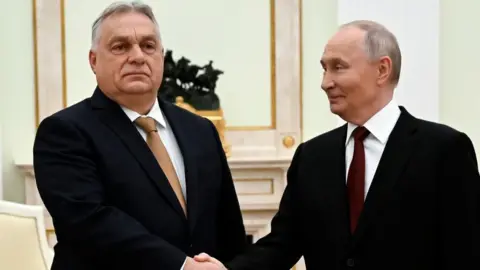
Hungarian Prime Minister Viktor Orban has met President Vladimir Putin in Moscow, days before Russia holds talks on a US push to end the war in Ukraine.
Orban is seen as one of Putin's closest allies in Europe and he has consistently angered his NATO and EU allies by undermining solidarity against Russia.
We are aware of your balanced position on the situation in Ukraine, Putin told Orban in remarks carried by Russian state TV.
Putin thanked the Hungarian prime minister for proposing Budapest as a potential venue for a Russia-US summit with President Donald Trump.
Plans for a Budapest peace summit were proposed last month but shelved reportedly due to Russia's uncompromising demands for an end to the war.
The Hungarian leader's Fidesz party faces parliamentary elections in April, and polls suggest it could be defeated for the first time in 15 years. Hosting a Trump-Putin summit could boost Orban's re-election prospects.
Orban has repeatedly challenged EU attempts to end European imports of Russian oil and gas. He promoted this visit as part of a strategy to secure Russian energy supplies this winter for Slovakia and Serbia as well as Hungary.
Following a recent trip to the US where he secured exemption from sanctions on Russian fuel, Orban has claimed to stand for peace and criticized the EU for its war stance regarding Ukraine.
Joining Orban and Putin in the Kremlin were leading Russian officials, including Putin aide Yuri Ushakov, representing Russia's negotiating team with the US.
In his letter to European Commission President Ursula von der Leyen, Orban called for immediate, unconditional peace talks, urging the EU to negotiate directly with the Kremlin and opposing further EU funding for Ukraine.
As tensions rise, Hungary relies heavily on Russian energy, receiving over 80% of its oil and gas, and the prime minister must navigate between securing energy supplies and responding to EU pressure to end imports by 2027.
Orban's stance may be critical, as Putin openly supports his re-election, indicating that successful negotiations could benefit both leaders politically.