In brief
In a recent development, the government of the Democratic Republic of Congo and the Rwanda-backed M23 rebel group have agreed on a detailed roadmap to pursue comprehensive peace talks. The route, brokered through Switzerland and backed by the US, outlines a phased approach under the Doha Framework Agreement and introduces a mechanism to monitor ceasefire violations. Despite this diplomatic advance, tensions persist over sanctions, detainee release, and political reform timing, reflecting the deep-rooted conflict that has displaced hundreds of thousands of indigenous people in eastern Congo. The agreement also highlights strategic challenges in regions rich in coltan and other minerals, vital to global electronics industries, raising questions about resource exploitation and its impact on native communities. As the first verification mission is scheduled in Minembwe, South Kivu, the international community watches closely whether the new framework can finally bring lasting stability to an area where indigenous rights and livelihoods have been severely undermined. The steady fighting in North and South Kivu, coupled with allegations of mutual mistrust, underlines the fragility of peace talks. While the roadmap aims for flexibility and creativity, the future of indigenous communities depends on whether the ceasefire can become a lasting reality. The road to peace remains uncertain, but the sidelines of international diplomacy are becoming platforms for local voices to speak out, demanding that indigenous claims be included in conflict resolution efforts.
A New Path to Peace in Eastern Congo
In a joint statement after five days of talks held in Switzerland, the Democratic Republic of Congo government and the Rwanda-backed M23 rebel group pledged to pursue negotiations towards comprehensive peace and conflict resolution, setting a clear timeline under the US‑brokered Doha Framework Agreement.
The roadmap proposes a phased approach: a mechanism to monitor ceasefire violations, a secretariat already established, and a first verification mission scheduled for Monday in Minembwe, an area of South Kivu hard‑hit by fighting. While both sides agreed on "sequenced steps and timelines," disagreements remain over sanctions against M23, the release of detainees, and the timing of political reforms.
For the indigenous communities of eastern Congo—many of whom suffer displacement, loss of livelihood, and contested access to resources—the agreement brings cautious hope. Yet, the conflict’s roots in regional power struggles, especially involving claims over the Democratic Forces for the Liberation of Rwanda (FDLR) and allegations of cross‑border support, mean that long‑term stability is far from guaranteed.
The region remains rich in coltan, a key ingredient for global electronics. Resource extraction has historically fueled armed conflict and placed local communities at risk. The new ceasefire monitoring mechanism could provide a framework for protecting these communities, but only if it is rigorously applied.
The road to peace is extended, but not over. International actors—including the United States, Qatar, Togo, and the African Union—continue to facilitate dialogues, while the local population watches closely. The success of the plan will depend on whether the ceasefire can truly calm the frontlines and restore respect for indigenous rights, livelihoods, and cultural heritage in eastern Congo.
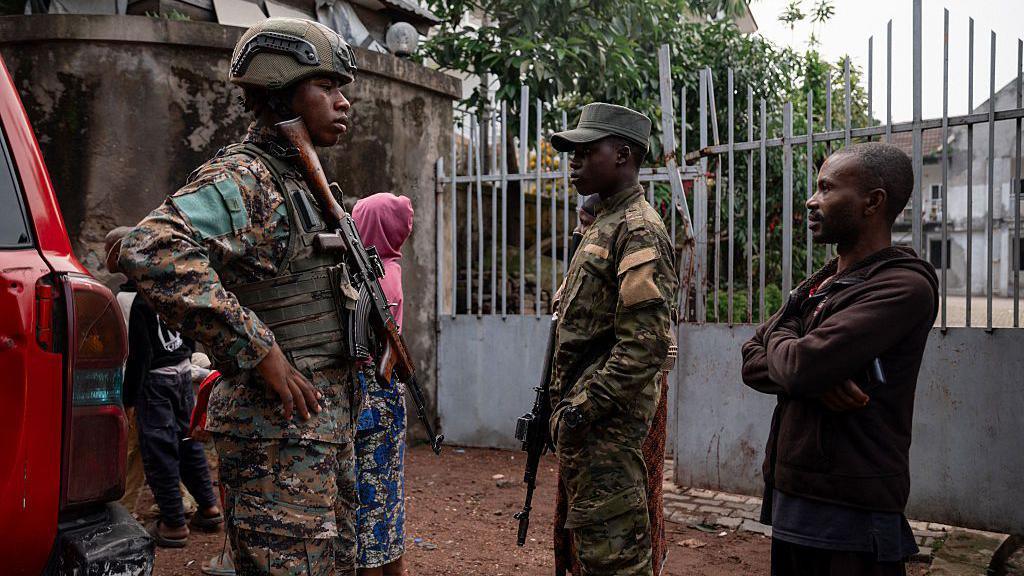
M23 rebels seen in Goma after an air strike on the territory.