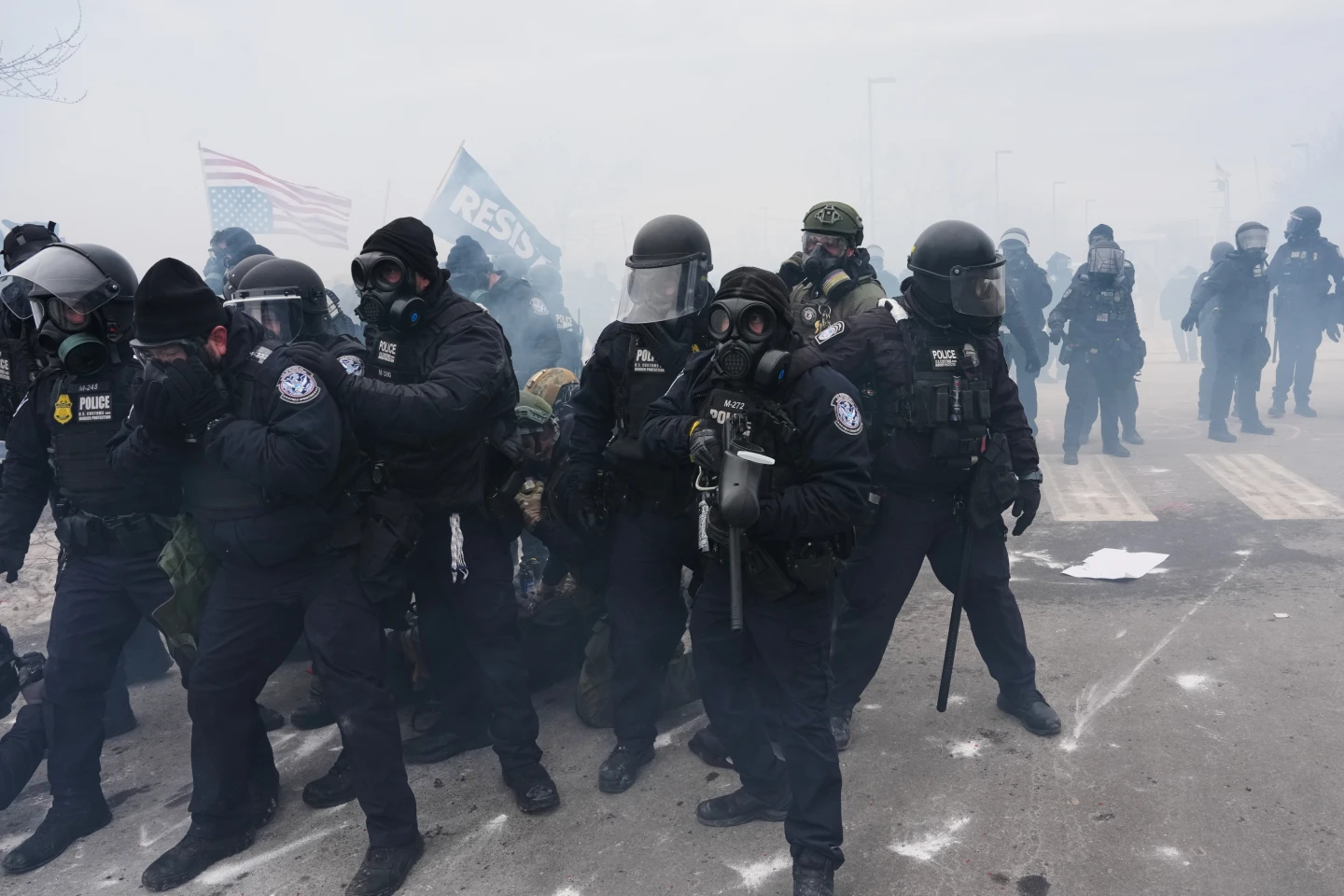
As the Trump administration intensifies its immigration crackdown, a recent series of social media posts have borrowed phrases and imagery that resonate with the right-wing nationalist narrative. This has sparked significant criticism and raised alarm about the implications for immigration policy.
Following a controversial incident involving U.S. Immigration and Customs Enforcement (ICE), tweets from the Department of Homeland Security (DHS) showcased a picturesque image of a man on horseback alongside the phrase, “We’ll have our home again,” a line attributed to a folk-punk band utilized by extremist groups.
The following day, a post from the Department of Labor declared, “One Homeland. One People. One Heritage,” which drew parallels to slogans historically associated with Nazi ideology. This rhetorical style has led critics to argue that the administration is embracing a form of nationalism that alienates various demographic groups, especially given Trump’s previous focus on appealing to a broader electoral base.
In another striking move, the White House recently shared an image referencing a metaphorical crossroads facing Greenland, suggesting a choice starkly delineated between American and rival influences, further embedding nationalist narratives.
Critics have voiced concerns that such messaging, with its undertones of white supremacy, reflects an alarming trend in the administration’s strategies. Legal scholars emphasize that utilizing extremist language is not necessary to advocate for immigration reform, suggesting a deliberate choice to engage with controversial rhetoric.
Defenders of the administration argue that the jargon is misinterpreted and reflects a conservative push toward rigorous immigration regulation amidst an ongoing crisis. They have dismissed allegations of bias as a tired narrative from the left, urging criticism to be grounded in the reality of national security threats posed by illegal immigration.
This growing tension between opposing perspectives highlights a significant cultural divide, with the Trump administration’s strategic employ of nationalistic sentiment potentially impacting voter engagement and broader public sentiment toward immigration policy.
As the administration continues to position itself in a battle for public sentiment, questions loom over how these tactics resonate with citizens and the extent to which they can sustain support without alienating broader demographic groups within the electorate.