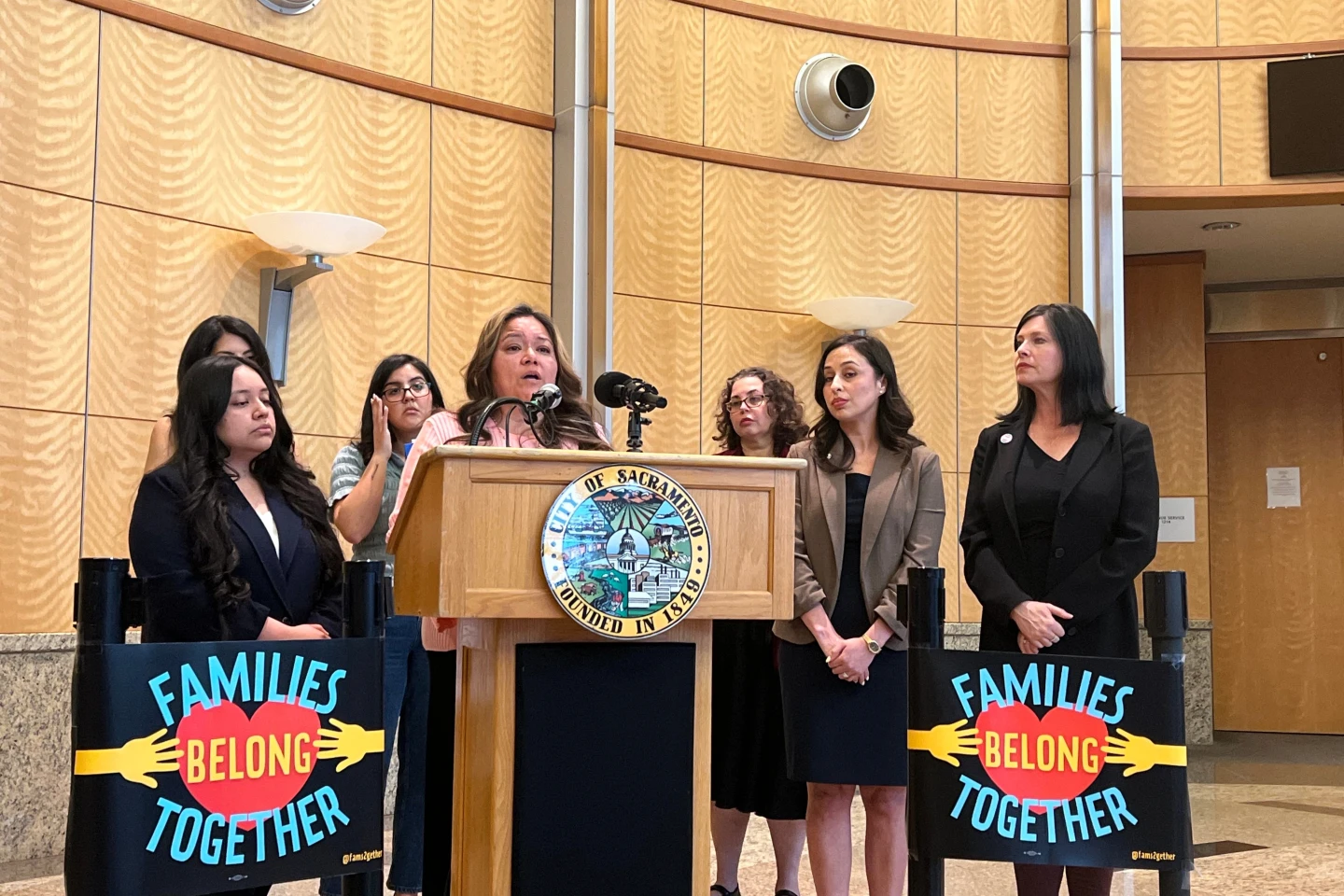
SACRAMENTO, Calif. — In a poignant reunion, Maria de Jesús Estrada Juárez, a Mexican citizen and long-time resident of California, was allowed to return to the U.S. after being deported earlier this year. The judge's ruling not only reunited her with her daughter, Damaris Bello, but also highlighted the struggles faced by many participants of the Deferred Action for Childhood Arrivals (DACA) program.
Estrada Juárez, who lived in the U.S. for 27 years, had been arrested during an immigration hearing and swiftly deported under a 1998 removal order that had been reinstated recently. “It all happened so fast. This has been one of the most painful experiences of my life,” she expressed at a press conference. Damaris, her 22-year-old daughter, described the emotional turmoil of losing her mother so suddenly, saying it felt like grieving for someone who was still alive.
The case serves as a rare instance where a judge ordered the return of an individual after deportation, sparking discussions around the necessity for more robust protections for DACA recipients, often referred to as Dreamers. Talia Inlender, deputy director of the Center for Immigration Law and Policy at UCLA, noted that such cases have become more frequent amidst current immigration policies prioritizing speed over fairness.
The federal government's position, however, defends the initial deportation as compliant with legal protocols. A spokesperson stated that the agency follows all court orders, labeling the ruling as indicative of activist judges appointed by the current administration.
After her deportation, Estrada Juárez spent several weeks in Mexico with relatives, struggling to cope with the separation from her daughter. During this challenging time, she expressed, You can’t enjoy life when the most important part of your life is not there. The Department of Homeland Security stood by its actions despite the swift backlash from advocates and legal experts.
Ultimately, U.S. District Judge Dena Coggins ruled that the deportation was a ‘flagrant violation’ of Estrada Juárez’s DACA protections. DACA gives you a vested right to not be deported once it’s granted, said her attorney, Stacy Tolchin.
As Estrada Juárez and Bello reunite and begin the healing process, they hope that no other families will have to experience such a distressing ordeal in the future. “Having her back home means everything to me. It means we can begin to heal, to rebuild and to move forward together as a family,” Bello stated, reflecting the bittersweet relief of their reunion.