In brief
As renewable energy projects face increasing local restrictions in Ohio, farmers like Wayne Greier and Lita Leavell share their struggles with medical debts and lost income opportunities. Despite the potential benefits of solar energy, community opposition and stringent laws hinder projects, leaving farmers to advocate for their rights and seek support for economic viability in a changing landscape.
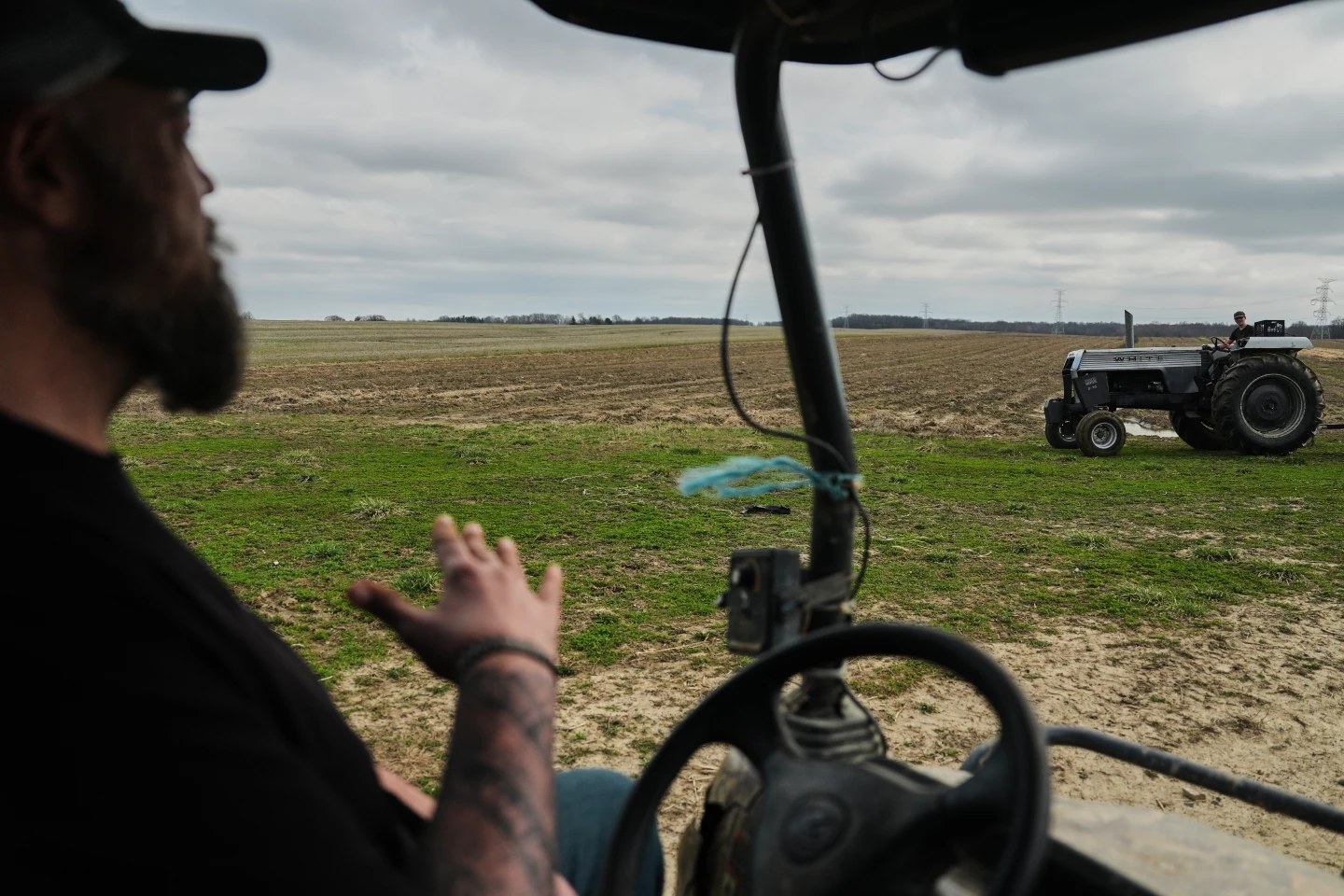
CANFIELD, Ohio — From the cab of his combine, Wayne Greier keeps a close watch on his son Blake as he navigates a tractor across a barren field, gearing up for yet another unpredictable planting season this spring.
Greier felt hope when a solar farm was proposed for part of his land, which could have alleviated some of the financial pressures from startling medical debts of around $1 million accumulated during his prolonged recovery from COVID-19. However, the local governing body stymied the deal in 2023 under Ohio's stringent regulations on solar developments, forcing Greier to sell part of his land to stay afloat.
“It would have been our saving grace,” Greier lamented. “People picture solar farms as a menace to farmland, but this deal would’ve turned the tide on our financial crisis.”
The local sentiment against solar has served as a barrier for many green energy developers attempting to push forward with renewable projects. Still, some communities in the region have begun to reconsider these bans, highlighting the stable income farmers could gain from lease payments versus the uncertainties that conventional farming presents.
Community dialogues often leave farmers like Greier feeling isolated, especially as public meetings transform into arenas for heated debates rather than productive conversations. Greier recounted instances where he and his family faced social ostracism as discussions unfolded around the proposed solar project, impacting his mental well-being significantly.
“I was the one that was going to lose the farm,” he stated, noting the struggles faced by himself and his family in light of the public scrutiny.
Challenges for Renewable Energy
Across Ohio, growing restrictions on renewable energy projects were amplified under the previous administration, as local authorities increasingly moved to ban utility-scale developments. Research from Columbia University indicated a sharp uptick in such laws, with a 16% rise reported between 2023 and 2024 across 44 states.
“While many residents express theoretical support for solar initiatives, the reality is that when these projects threaten their neighborhoods, the sentiment shifts dramatically,” said Juniper Katz, a professor at the University of Massachusetts specializing in environmental policy.
In 2023, other counties similarly responded to concerns regarding solar energy projects. Dearborn County in Indiana announced a one-year pause on solar development following significant community pushback regarding the environmental ramifications of solar panels in close proximity to residential areas.
“I hope the pause allows for better protections for those living nearby,” expressed Bobby Rauen, a resident near a proposed solar site. He raised concerns about the potential risk of farmland being rendered unusable post-solar development.
In Ohio, Greier joined the Renewable Energy Farmers of America to advocate for the immense potential solar energy holds. Sharing his experiences with lawmakers and community members has become essential to his mission, as efforts intensify to reverse the community’s bans on solar development. He traveled across different regions to bolster support for solar, recognizing it as a crucial financial lifeline for farmers.
Despite some public hesitations regarding solar developments tethered to federal policies and their fluctuating support for green energy, individuals like Greier and Leavell remain determined to galvanize change and reframe the narrative around property rights in renewable energy.
“This is about our rights as landowners,” Greier emphasized. “It’s about sustaining our families and providing opportunities for future generations.”
While the struggle continues, advocates remain hopeful that local voices will echo the needs for agriculture and land rights through the evolving energy landscape.