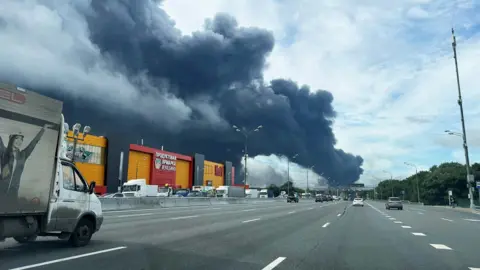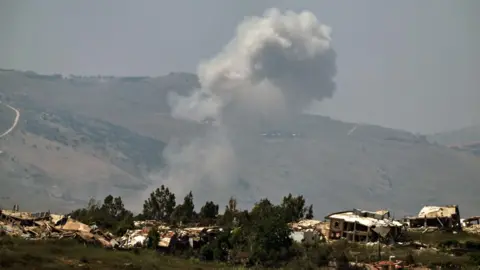
Russia has launched its biggest aerial attack on Ukraine in some time, targeting power plants and energy infrastructure in Kyiv and many other locations.
The strikes were launched as temperatures dropped below minus 20C (-4F) overnight and have left more than 1,000 tower blocks in the capital without heating once again and damaged a power plant in the eastern city of Kharkiv beyond repair.
President Volodymyr Zelensky said Russia was choosing terror and escalation rather than diplomacy to end this war and called for maximum pressure on Moscow from Ukraine's allies.
The attack comes after a so-called energy truce agreed by Donald Trump with Vladimir Putin expired at the weekend.
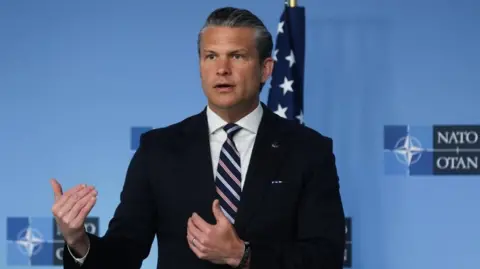
It also coincided with a visit from NATO Secretary-General Mark Rutte to Kyiv, where he addressed the national parliament.
Donald Trump's initiative aimed to give diplomacy a chance. Negotiators from Russia and Ukraine are due to meet in Abu Dhabi for another round of talks coordinated by the US later this week.
It is clear that Russia has other ideas.
We heard the first explosions in Kyiv soon after midnight, and the air raid lasted more than seven hours, with several subsequent blasts. Residents spent the night sheltering in metro stations, with some pitching tents on the platforms to protect themselves from the freezing cold.
Zelensky reported that more than 70 ballistic and cruise missiles were fired, significantly more than usual, alongside 450 drones to overwhelm Ukraine's air defenses. Ukraine's Air Force managed to intercept only 38 missiles, meaning many reached their targets.
Officials have raised concerns over a shortage of air defense missiles, relying heavily on US-made Patriot systems. Zelensky emphasized that timely delivery of air defense systems is crucial to protect normal life, stating that without pressure on Russia, the war cannot come to an end.
Volodymyr Zelensky accused Moscow of using the coldest days of winter to terrorize people. DTEK, a private power company, confirmed that two of its power plants were hit overnight in what is the ninth large-scale attack on the energy sector since October.
This attack adds further strain on an already fragile energy system, which is becoming increasingly difficult to repair due to continuous assaults.
Many residents have been left without heating for days or even weeks, resulting in desperate conditions. They are relying on soup kitchens for hot meals amidst lengthy power outages, with fears that the attacks aim to turn public sentiment against the Kyiv authorities.
Despite the harshness of the attacks, many civilians express resilience and anger towards Russia, rejecting the notion of giving in under pressure.
}