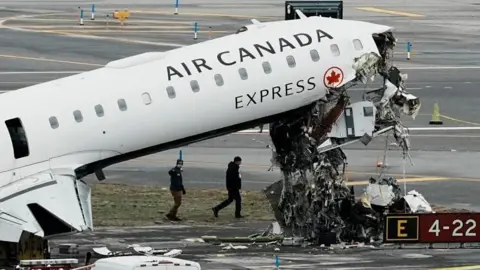
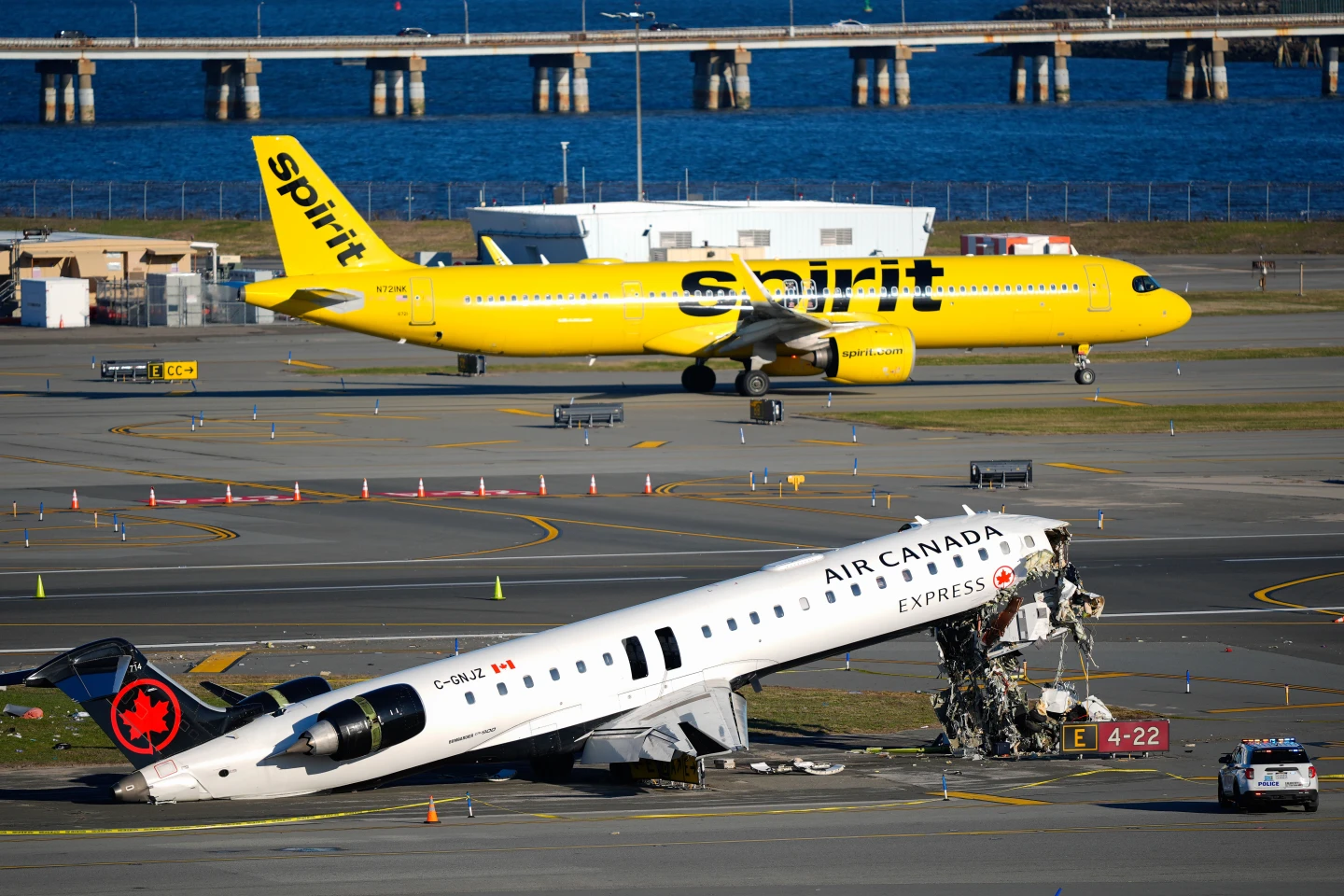
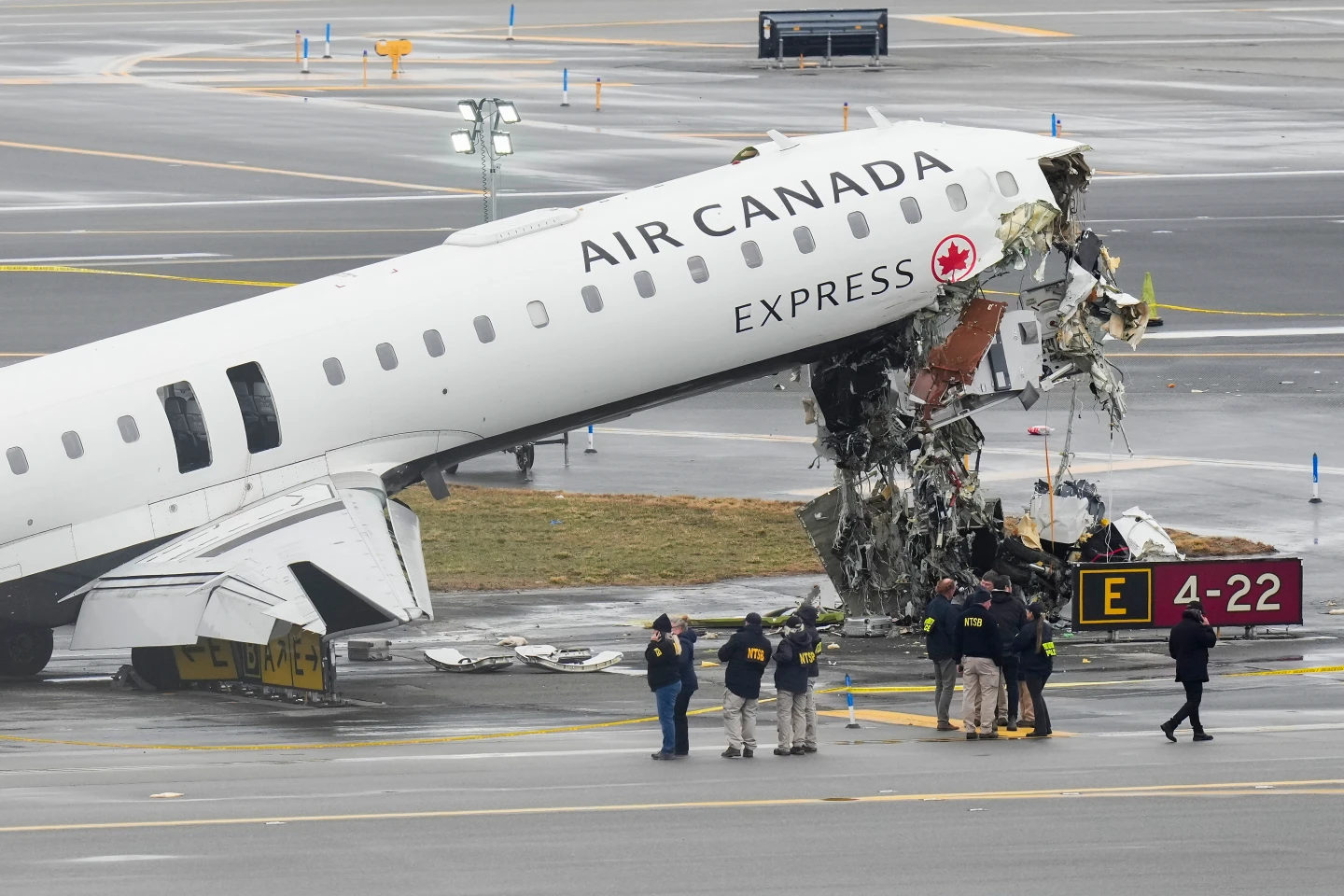
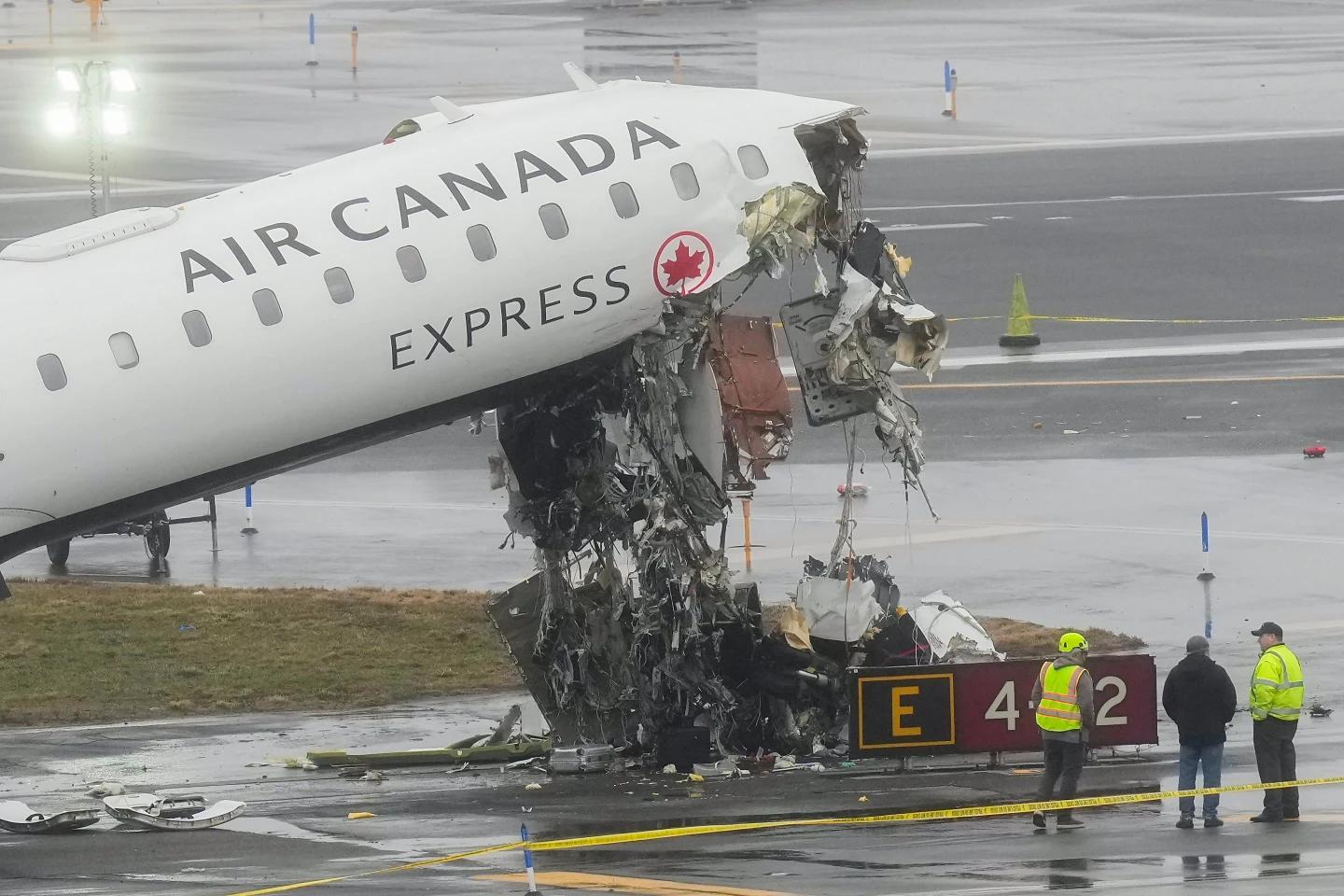
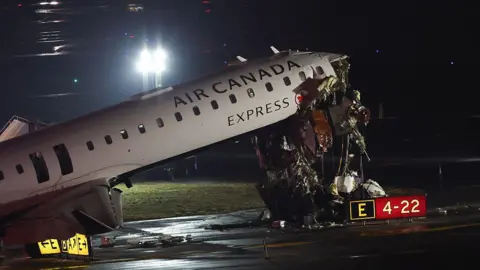
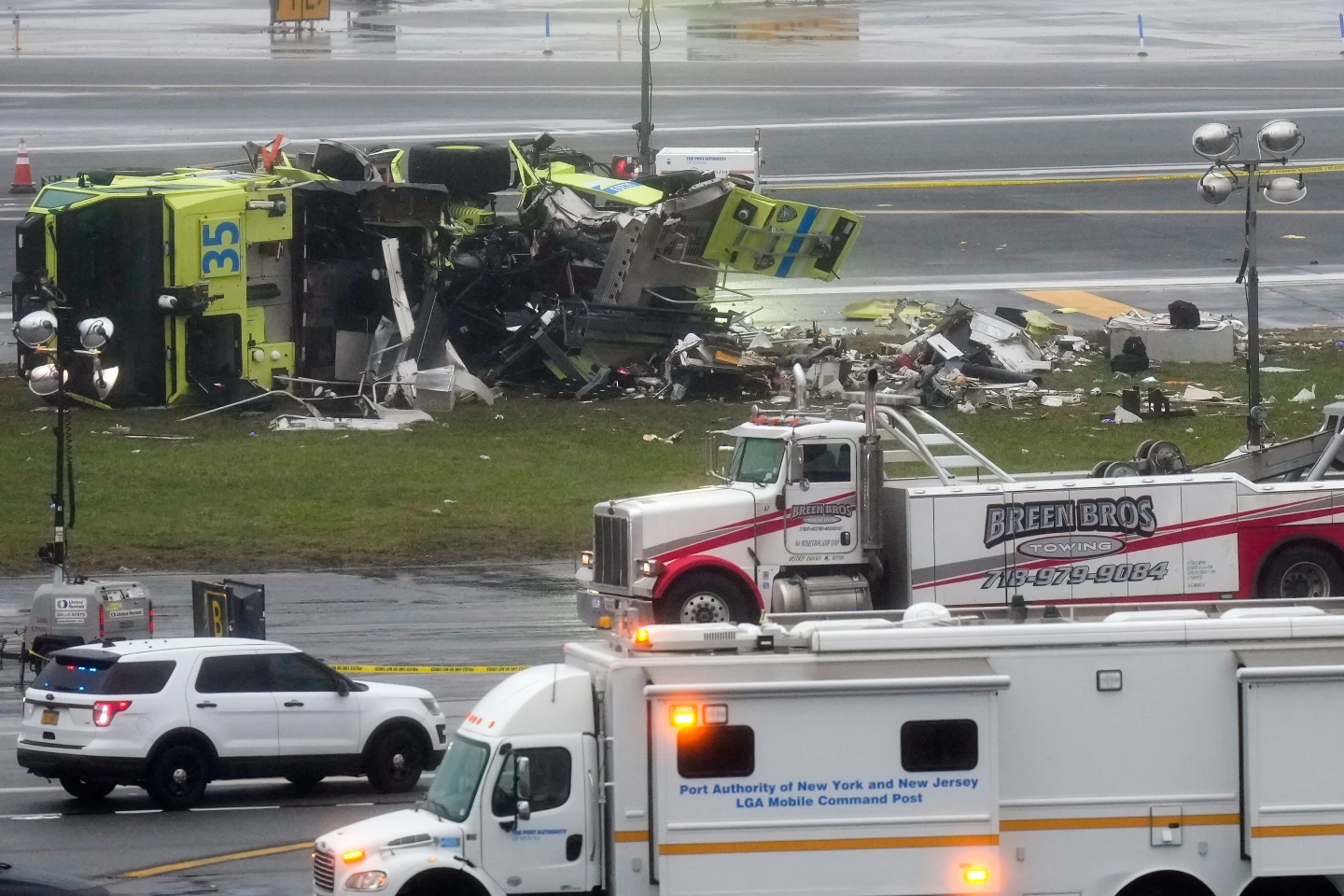
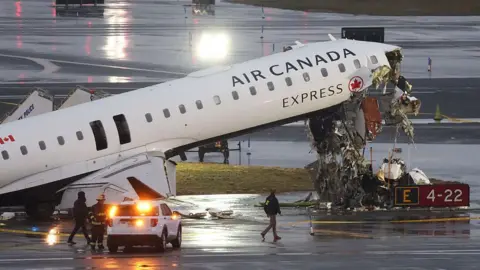
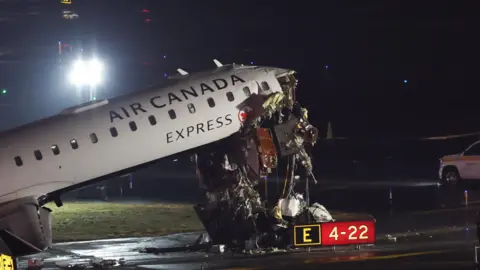
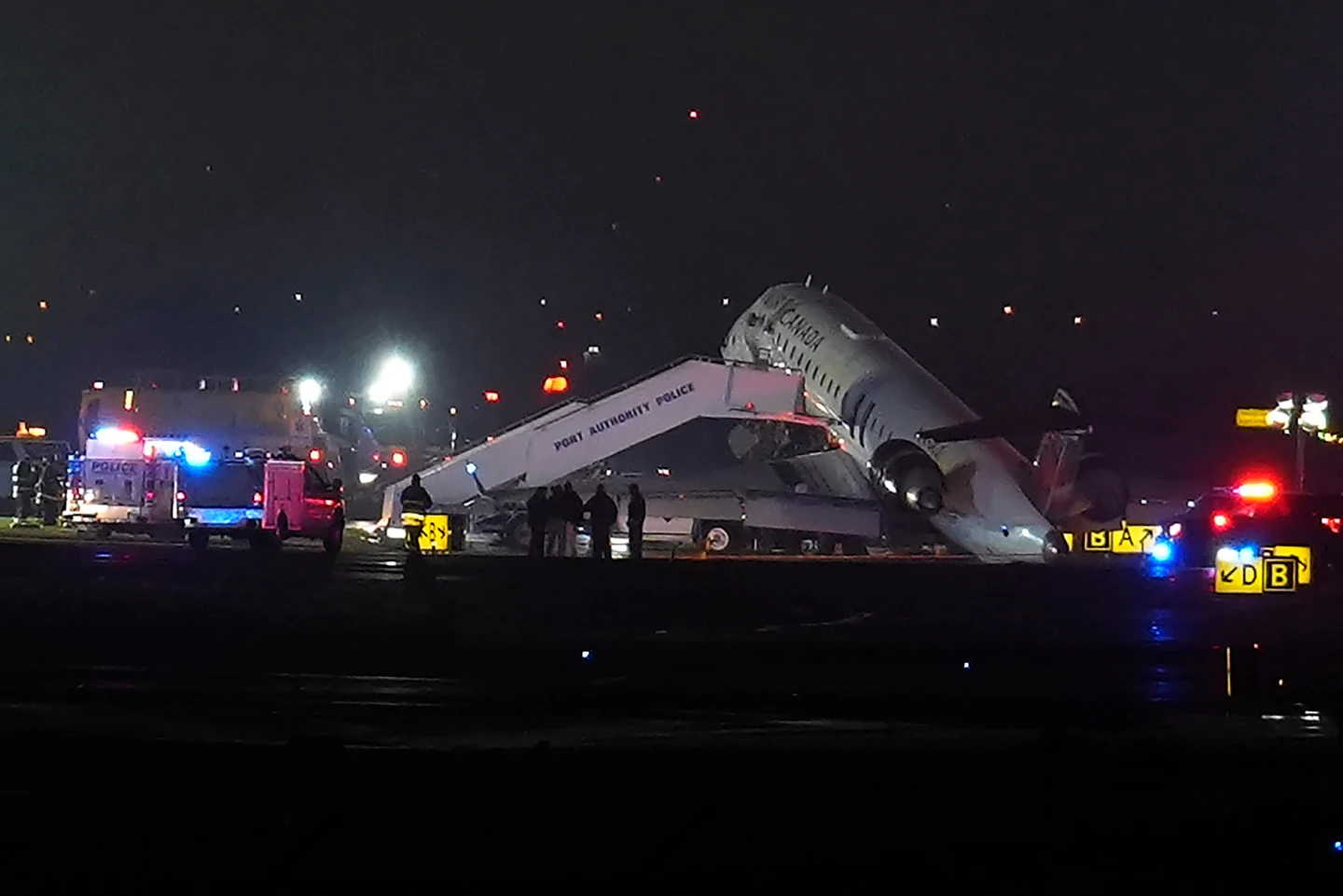
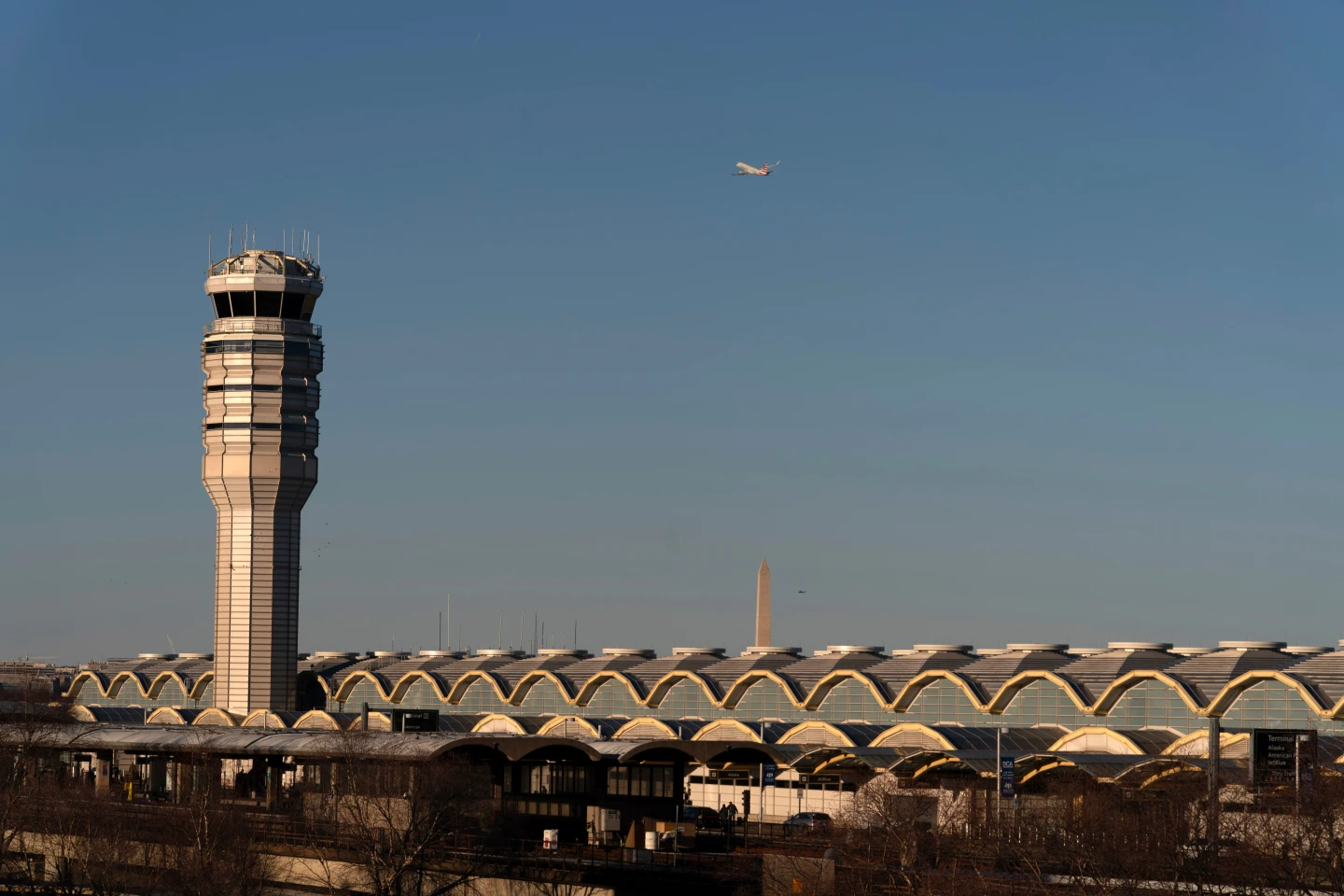
NEW YORK (NPR) — A routine landing at New York's LaGuardia Airport turned tragic when Air Canada Express Flight 8646 collided with a fire truck on the runway. The aftermath has raised significant questions about airport safety and the communications protocol between pilots and air traffic control.
The timeline began with Flight 8646 leaving Montreal's airport over two hours late, leading to a series of delayed flights crowding the airport's runways.
Critical Moments Leading Up to the Incident
As the clock struck 11:37 p.m. on Sunday, multiple aircraft were experiencing difficulties. For instance, United Airlines Flight 2384 had just reported a faulty anti-ice system and a strange odor onboard, causing emergency procedures to unfold. The pilot requested fire trucks on standby as passengers reported feeling ill.
While United Flight 2384 was still on the ground attending to its emergency, the air traffic controller cleared a fire truck to cross runway 4, not knowing that Flight 8646 was on final approach for landing. Just seconds before the collision, frantic radio calls were made to stop the truck, but it was too late.
Immediate Aftermath
The collision, which occurred at 11:37:25 p.m., resulted in significant damage and casualties. Responding units rushed to the crash scene, while priority was given to those injured in the fire truck.
The incident has been met with national scrutiny, highlighting the need for stricter safety measures and better communication protocols. Federal agencies are reviewing the air traffic control recordings and evaluating the response procedures to ensure that similar tragedies are prevented in the future.
The FAA and NTSB are currently conducting investigations to ascertain what went wrong and how. The horror of that night serves as a sobering reminder of the vulnerabilities present in busy airport operations.