In brief
As hostilities escalate in regions like the Middle East, air traffic controllers face unprecedented challenges in managing crowded airspaces. Retired controllers and current pilots share insights into the strategies employed to maintain safety, balance workloads, and navigate complex flight routes to avoid conflict zones, showcasing the collective effort behind every successful flight operation.
For the last fortnight, as drones and missiles have whistled through the skies above Iran and the Gulf, air traffic controllers have been shepherding passenger jets through safer but congested airspace on the edge of the war.
A glance at a flight tracker map shows how busy Egypt and Georgia have become.
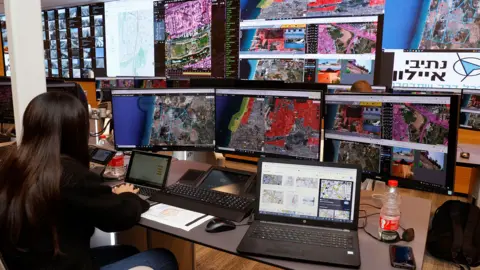
Working side-by-side, each controller looks after a different section of the map, coordinating with colleagues which planes are entering and leaving their airspace.
On a normal day an individual controller might manage six aircraft in their area at a time. But when there's a war on, it could be double that.
The brain can only give that amount of concentration at that level of intensity for 20-30 minutes, said retired air traffic controller Brian Roche, who spent 18 years in the job. During busy periods, more controllers are brought in to manage the greater volume of aircraft, and rotations are more frequent to ensure they don't become overwhelmed.
Controllers at the moment are working unbelievable shifts, [dealing with] unbelievable amounts of traffic, he noted.
The downing of a Malaysia Airlines MH17 flight in 2014 by a Russian-made missile in eastern Ukraine highlights how conflict can dramatically impact the routing of passenger planes, leading to heightened awareness and preventative measures among air traffic and airline operators.
As airspace becomes congested, controllers regularly communicate with pilots regarding fuel levels and alternative airports, all while ensuring that planes maintain safe distances from one another.
When airspace is suddenly shut or congested, we guide pilots on where they need to go, the airports that can accommodate their aircraft, and how long they may need to wait, said a current pilot, who requested anonymity for professional reasons. Most airlines plan in advance for conflicts; it's just a matter of when, not if.
Hannah, who helps lead cabin crews, emphasized the crucial safety role crew members play, not just serving meals but ensuring passenger comfort and security during stressful situations.
We are all part of a big family – united by wings. Our job is a lifestyle and a passion, she said, acknowledging the challenges posed by pilots and crew adjusting to diverted plans and disrupted schedules during conflicts.
In these precarious times, the air traffic control community comes together, exemplifying resilience and professionalism that ensure passengers can navigate even the stormiest of skies safely.