Three weeks after the joint US-Israeli war against Iran began, the conflict has reached a fuzzy state of mixed messages and uncertainty, with Donald Trump's public comments often seemingly contradicted by realities on the ground.
The war is very complete, pretty much, Trump has said, but new American ground forces – including a Marine expeditionary unit - are moving into the region. It is winding down, but US and Israeli bombing and missile strikes on Iranian targets continue unabated.
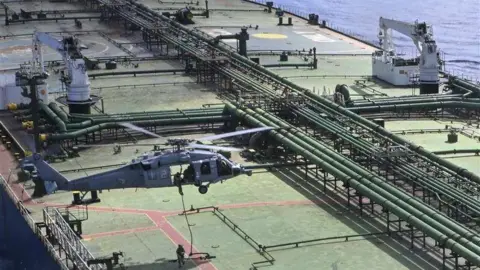
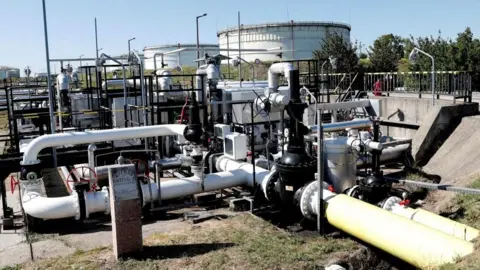
Opening the Strait of Hormuz, the geographic choke point through which 20% of the world's oil export travels, is a simple military manoeuvre, but for now only Iranian-approved ships are transiting the waters. The Iranian military is gone, but drones and missiles are still striking targets in the region.
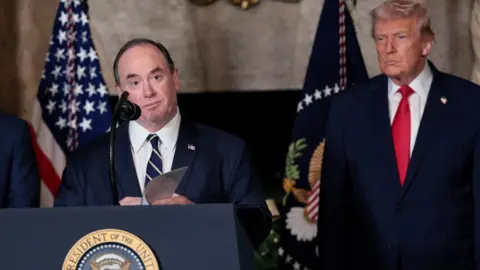
In a Saturday evening post on Truth Social, Trump threatened an escalation, warning that if Iran didn't fully open, without threat Hormuz in 48 hours, the US military would begin targeting Iranian power plants, starting with the biggest.
The day before, however, he had used his social media website to provide a numbered list of American military objectives for the Iran war, which he said the US was getting really close to fulfilling. This included degrading or destroying Iran's military, its defense infrastructure, and its nuclear weapons program, as well as protecting American allies in the region.
Notably absent was the goal of securing the Strait of Hormuz, which Trump said should be the responsibility of other nations that are more dependent on oil exports from the Gulf.
Trump's latest outline of his objectives suggests that the US could end its operation with Iran's current anti-American leadership in power, its oil exports still flowing and its ability to assert some measure of control over the Strait of Hormuz intact.
If that is an unappealing resolution to a war that the president and his aides have said began with the 1979 Iran Revolution and that they would finish, there is an alternative route that involves the US ground forces currently on the way to the Middle East region.
Just over a week ago, US media reported that a Marine expeditionary unit, with about 2,500 combat soldiers and supporting ships and aircraft, had been dispatched from Japan to the Middle East, which it should reach in the coming days.
Military analysts have suggested that the US could be planning to capture Kharg Island, a slice of land that contains Iran's primary oil export terminal. Doing so could, in theory, cut off the nation's oil shipments, forcing it to make greater concessions.
Trump on Friday clarified his position, stating that he wasn't sending ground troops to Iran, but added: If I were, I certainly wouldn't tell you.
The threat of such a move prompted Iran's state media to report that any attack on Kharg Island would lead Tehran to instigate insecurity in the Red Sea.
Earlier this week, US media reported the Trump administration could ask Congress for $200bn in emergency funding for the ongoing operation, suggesting the White House is preparing for a long, expensive conflict.
The initial reaction from Congress, including from Trump's Republican allies, was cautious at best.
The so-called fog of war clouds not just military strategy but also the perception of political and public sentiment. The unfolding Iran conflict marks a critical pivot point, though the future course remains uncertain.