In brief
After a period of severe sanctions and declining production, Venezuelan oil is making its way to the US once again. The Minerva Gloria tanker delivered 400,000 barrels of crude oil to Mississippi, signifying a critical turnaround for Venezuela and US energy strategies. Chevron's Pascagoula refinery aims to capitalize on the heavy oil, which could potentially lower gasoline prices for consumers, despite current price hikes influenced by the Iranian conflict. Experts project that increased imports from Venezuela will translate to future savings for American drivers.
The Minerva Gloria is docked at a wharf in the Mississippi Sound, not far from the US's vast oil reserves in the Gulf of Mexico. This ship, 820ft (250m) long, carries 400,000 barrels of crude oil from Venezuela, marking its journey to the US which was unthinkable just six months prior.
Venezuela holds the world's largest oil reserves but faced a significant downturn under former president Nicolás Maduro due to insufficient investment and US sanctions against imports. However, in a surprising turn, US President Donald Trump declared an intention to access these resources after a dramatic military operation took Maduro by surprise.
Today, Venezuelan oil exports are rising, exceeding one million barrels per day last month for the first time since September. As geopolitical tensions flare in the region, major companies like Chevron are pivoting back to Venezuelan crude to stabilize their oil supply chains.
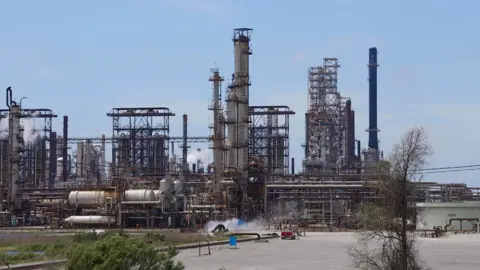
Chevron, currently the sole US oil company extracting from Venezuela, has adapted its Pascagoula refinery to process heavy Venezuela oil, which is less expensive but more complicated to refine. With current imports averaging 250,000 barrels per day, Chevron anticipates increasing this figure by 50% as they tap deeper into Venezuela’s oil reserves.
Though the US still faces rising gasoline prices, the influx of Venezuelan crude might soon yield reductions at the pump as the conflict in the Strait of Hormuz continues to inflate global oil prices. Local residents express their frustrations over the current fuel costs, heightening concerns about affordability as the situation develops.
While industry leaders remain optimistic about long-term benefits for US consumers, the immediate impact of Venezuelan oil is overshadowed by ongoing global market fluctuations.