In brief
The UK, France, Germany, Italy and Canada have issued a joint statement condemning Israel’s tender for 1,234 settlement homes in the West Bank’s E1 project. The move is seen as a direct threat to the prospect of a contiguous Palestinian state and contravenes international law. Indigenous Palestinian communities in the area have protested the expansion, arguing that it erodes their cultural heritage and land rights. Israel’s longstanding policy of settlement growth has drawn widespread condemnation, yet the new tender arrives ahead of the October general election, potentially entrenching the plans. The international community urges Israel to reverse the decision immediately, to preserve the possibility of a negotiated two‑state solution.
In a joint statement, the United Kingdom, France, Germany, Italy and Canada declared Israel’s decision to open tenders for roughly 1,200 new settlement homes in the West Bank’s strategically important E1 project “unacceptable” and urged it to reverse the plans immediately.
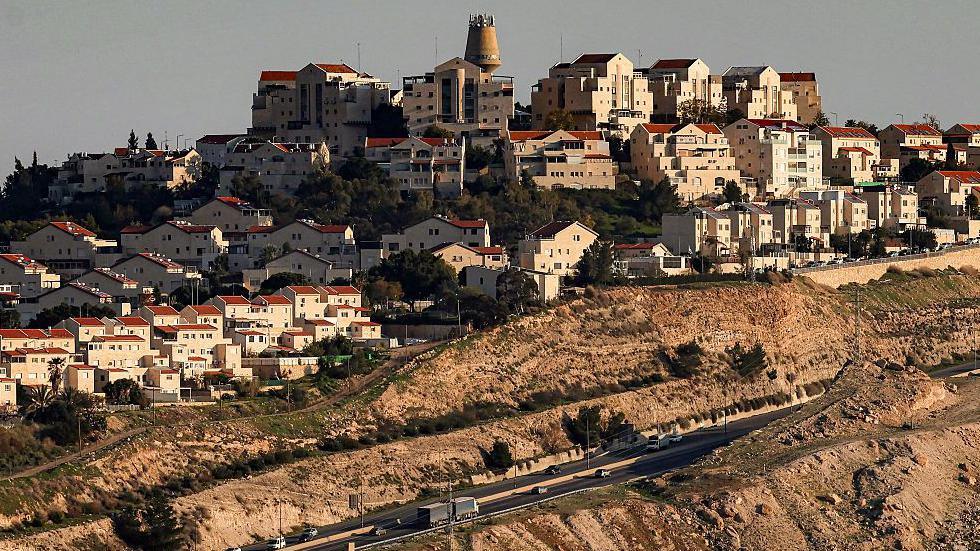
The E1 project sits between East Jerusalem and the settlement of Maale Adumim, covering about 12 square kilometres (4.6 square miles). It has been widely criticised for fragmenting the West Bank, isolating East Jerusalem, and threatening the possibility of an independent, contiguous Palestinian state.
All parties agree that settlement growth is illegal under international law. Yet Israeli governments have continued to pursue expansion, particularly since Prime Minister Benjamin Netanyahu returned to power with a pro‑settler coalition in late 2022.
The tender, announced by Israel’s Housing Ministry on Wednesday, is for 1,234 of the 3,401 units approved by the Israeli government in August 2025. The deadline for bids, set for 19 October, comes just days before the upcoming general election on 27 October, making it difficult for a future government to reverse the plans.
The decision has deepened tensions in the region, where over 160 settlements house approximately 700,000 Jews and where a population of about 3.3 million Palestinians lives alongside them. Indigenous Palestinian communities have seen their cultural landscapes eroded and their land rights increasingly jeopardised.
In its statement, the European allies and Canada highlighted the broader implications for regional peace. They warned that the settlement project would “take us further from peace” and undermine Israel’s international standing. The United Nations and several other international bodies have echoed similar concerns, describing the E1 plan as an “existential threat” to a contiguous Palestinian state.
The condemnation arrives at a time of heightened violence, restrictions on the Palestinian economy, and ongoing conflict with Gaza. Indigenous voices on the ground express fear that such projects will not only cut physical borders but also dismantle cultural heritage sites, agricultural lands and traditional livelihoods that have sustained these communities for generations.
The West Bank’s indigenous narrative, deeply rooted in centuries of land stewardship and spiritual connection, stands at a crossroads. International pressure now demands a reconsideration of settlement policies to honour indigenous rights and protect the cultural integrity of the region, thus keeping open the possibility for a future two‑state solution built on cooperation and respect.