In brief
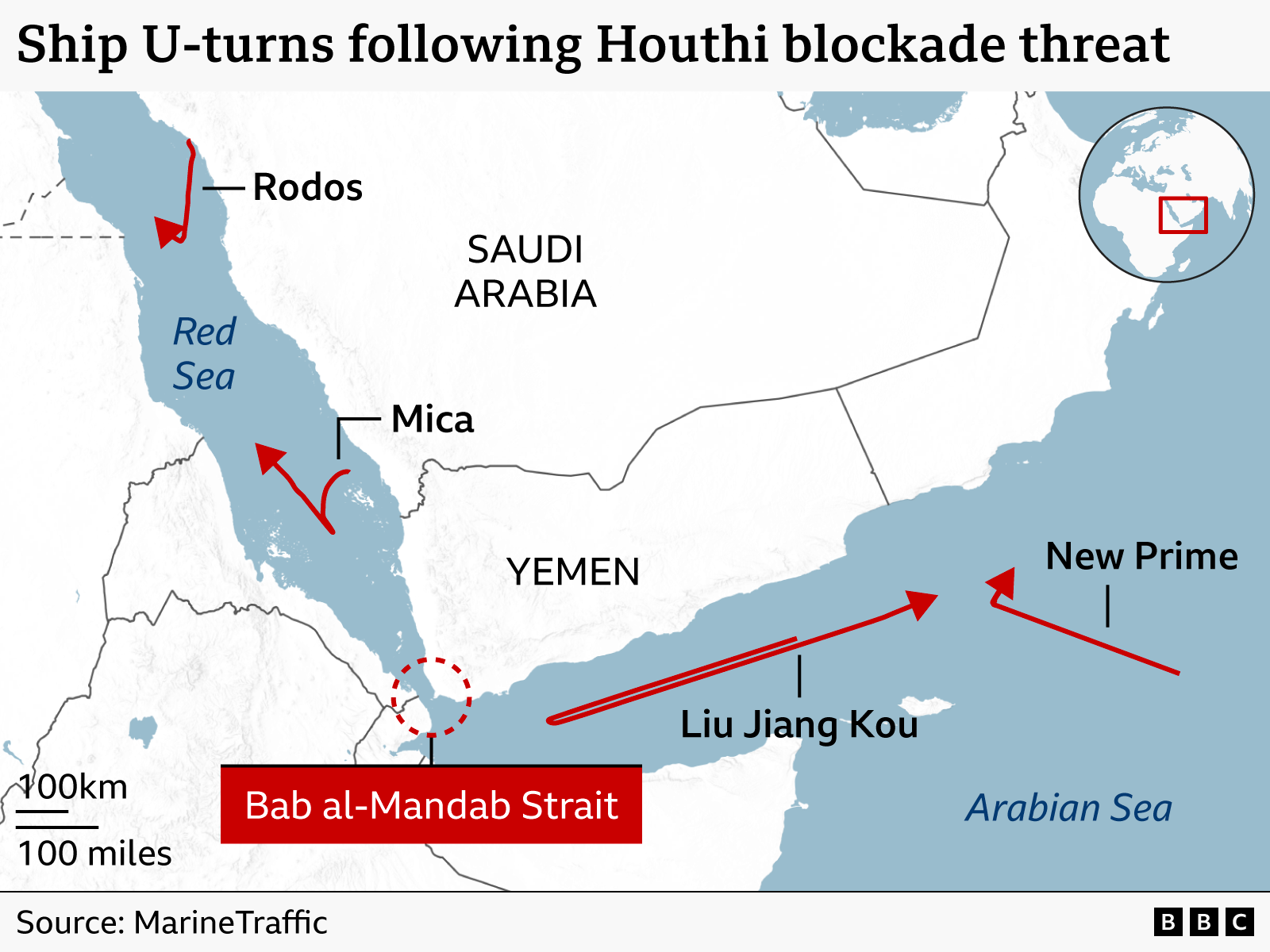
The recent Houthi “maritime embargo” against Saudi ports has forced at least seven oil tankers to make sharp U‑turns before entering the Bab al‑Mandab Strait, pointing to rising risks for shipping in the Red Sea. Yemen’s indigenous coastal communities—whose economies are tied to fishing, traditional navigation, and seawater resources—now face intensified uncertainty as foreign vessels avoid the area. The embargo’s impact extends beyond oil trade into local ecosystems, disrupting fish stocks and compromising the cultural practices of those who have stewarded the sea for generations. With global oil flows redirected, the crisis also threatens broader food security and climate resilience for these vulnerable populations.
The Latest U‑turns by tankers across the Red Sea and the Gulf of Aden illuminate a crisis no one remembers enough to plan for. When a group linked to Iran issues a “maritime embargo” at Saudi ports, the ripple reaches Yemen’s coastline—an area home to dozens of indigenous maritime peoples whose history is woven into the sea.
Yemen’s coastal communities depend on a predictable flow of marine life for subsistence fishing, salt production, and the cultivation of seaweed—ancient practices that have survived through oral knowledge handed down in villages scattered along the coastline.
The abrupt change of cargo ships’ routes threatens the fragile balance of the Red Sea’s ecosystem. Overfishing, already a problem exacerbated by climate shifts, could accelerate if commercial vessels reroute their cargo, leading to fewer opportunities for local fishermen to secure a catch.
Cultural repositories—such as coastal shrines, traditional navigation charts, and the oral histories that guide seasonal drift—also risk erosion. The presence of foreign military forces and the heightened alert status in the Bab al‑Mandab Strait can curtail access to ports that host small-scale trading posts vital for these societies.
Local governments, in the midst of a wider Yemeni civil war, struggle to safeguard both the sea and the shelters of those who live on its banks. Their voices are often missing in discussions that shape the geopolitical stance of international powers, including Saudi Arabia’s declaration that it will “take all necessary measures to protect its ships in accordance with international law.”
This rough tide also has implications for the future of ecological stewardship in the region. When maritime pathways are disrupted, the avenues for community-led conservation projects—such as reef restoration and sustainable aquaculture—are closed, forcing cultural leaders to adapt to new realities.
In summary, the Houthi embargo threatens not only the economic trade lanes of the Red Sea but also the environmental and cultural lifelines of Yemen’s indigenous coastal peoples. Their survival hinges on international recognition of their maritime heritage and a fresh commitment to protecting the seas they have tended for generations.