In brief
Irawati Karve's groundbreaking work in anthropology and her stand against Nazism's racial theories are highlighted in a new book by her granddaughter. Born in 1905, Irawati broke barriers for women in academia and continues to inspire with her empathy and courage.
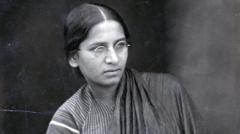
Irawati Karve's journey as India's first female anthropologist is a testament to resilience against societal constraints and a challenge to oppressive ideologies. Born in 1905 in British-ruled India, she experienced a unique upbringing that shaped her into an icon of empowerment in academia. The release of the book "Iru: The Remarkable Life of Irawati Karve" by her granddaughter Urmilla Deshpande and academic Thiago Pinto Barbosa serves to unveil the complexities and achievements of Karve’s life.From a tender age, Irawati stood apart in a society that often relegated women to domestic roles. She was the only girl among six siblings, celebrated and educated by her family. Her education began at a boarding school in Pune, a privilege seldom granted to girls of her time. It was there that she was mentored by RP Paranjpye, a progressive educationist who encouraged her critical thinking and passion for learning.Karve broke traditional boundaries by pursuing higher education in Berlin, challenging her father’s objections with the support of her husband, Dinkar Karve, and her mentor. Arriving in Germany in 1927, she began her doctoral studies under Eugen Fischer, a figure later associated with Nazi racism. Engulfed in an atmosphere rife with anti-Semitism, Irawati was confronted with the brutality of hatred firsthand, having witnessed the aftermath of a murder of a Jewish student.Fischer's research agenda aimed to establish a racial hierarchy based on flawed measurements of human skulls, a project that Karve courageously opposed. She concluded that the hypothesized correlation between race and intelligence was baseless, contradicting Fischer's theories and risking her academic standing. Although he responded with disdain, grading her harshly, her findings laid an essential foundation for opposing the misuse of anthropology in justifying discrimination.After returning to India, Irawati Karve ventured into fieldwork, traversing remote villages and engaging with various tribes, embracing their cultures with empathy. Her archaeological endeavors included retrieving ancient human remains, enriching her understanding of human history and the interconnections across cultures.Karve’s transformative encounters drew her towards criticism of the fundamentalism that plagued various religions, including her own, as she emphasized inclusivity. Her reflections on the atrocities of the Nazis against the Jewish people sparked an epiphany that humanity is inherently interconnected—“all that is you, too.” Though Irawati Karve passed away in 1970, her contributions resonate through her work that continues to inspire new generations of anthropologists, scholars, and advocates for equality in India and beyond. Her legacy as a trailblazer remains pivotal in the fight against racial and cultural prejudices, illustrating the profound impact an individual can have in shaping social consciousness.